
Tags
Share
AI has already changed how software gets written, but it hasn’t necessarily changed how software gets delivered.
Developers are automating more of their individual workload to generate code faster and troubleshoot problems. But their output still has to move through requirements, implementation, testing, review, deployment, and maintenance. Speeding up one part of that process achieves little if it simply means hitting the next constraint faster.
This begs a broader question: does the software delivery model itself need to change? And that’s the premise behind Agentic SDLC. Instead of developers using AI tools within a largely unchanged delivery process, autonomous agents take responsibility for defined stages of software delivery. Although human engineers remain accountable for the work, they no longer need to perform or supervise every step.
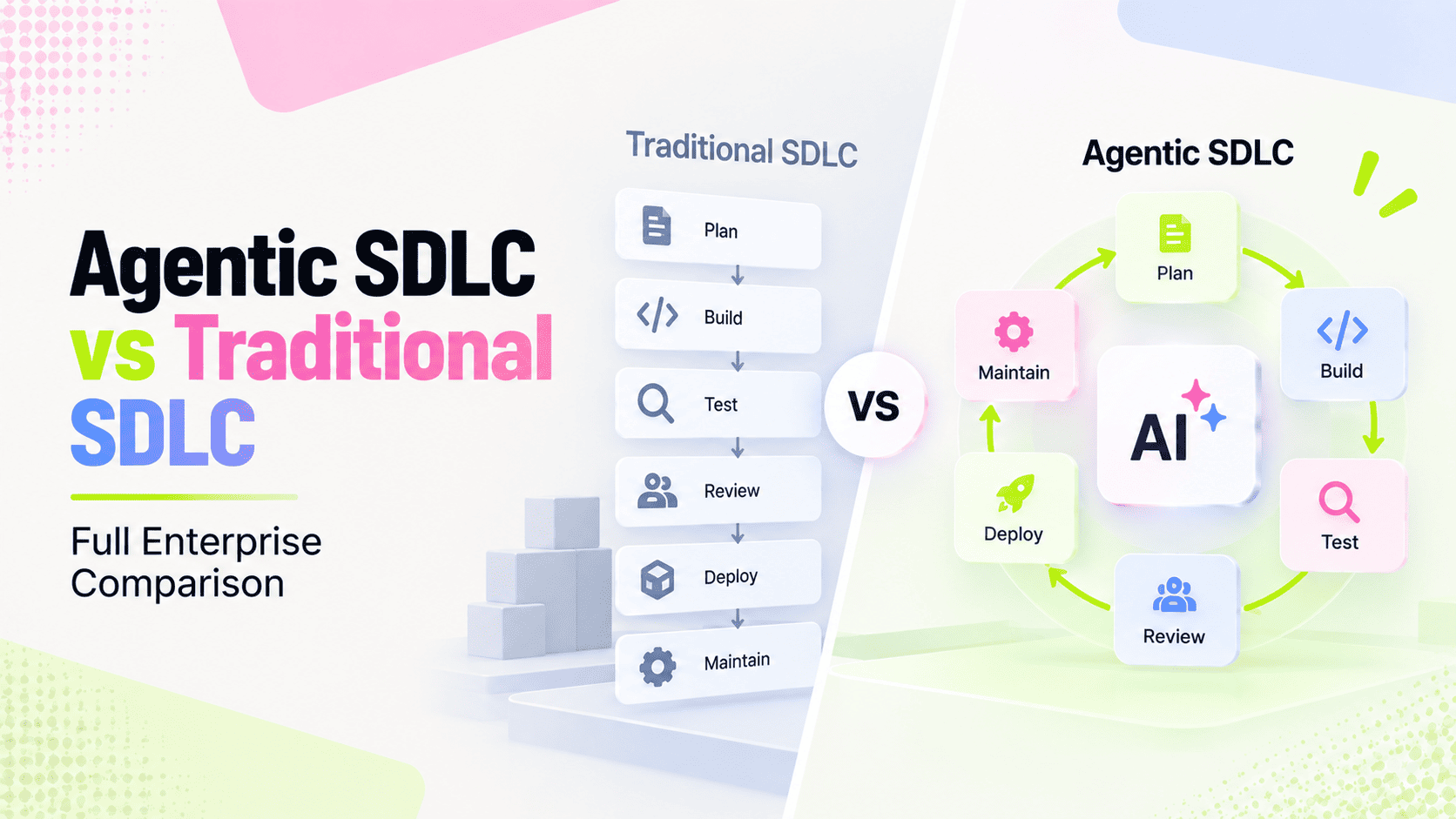
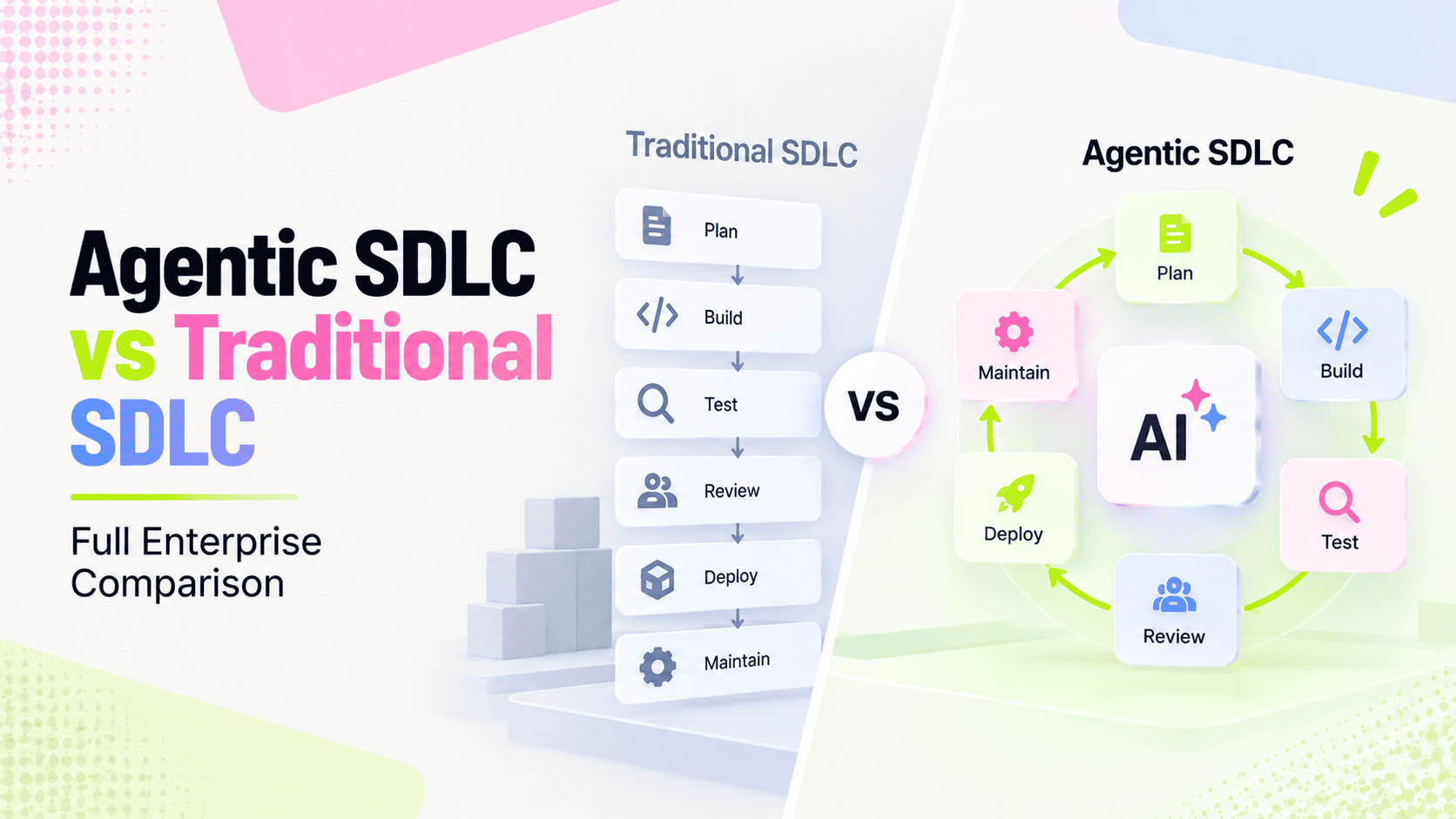
That’s a much bigger proposition than adopting yet another developer tool. Agentic SDLC changes where work happens, how it moves through the SDLC, how teams govern it, and potentially how engineering capacity is planned. In reality, the agentic SDLC vs. traditional SDLC comparison boils down to an operating-model decision.
This guide examines that decision across six dimensions: throughput, quality, cost, governance, scalability, and ROI visibility. It also looks at what organizations need to change to make the transition, where human judgment remains essential, and how to decide whether an agentic model is the right fit for your engineering organization.
What Traditional SDLC Looks Like in 2026 (and Why It Is Under Pressure)
Traditional software delivery remains largely sequential at the work-item level, even when the teams operating it use Agile methods. Once requirements are defined and turned into tickets, engineers design and implement the solution. Then, the code moves into testing and review before reaching deployment and maintenance.
The process itself isn’t the problem. These stages exist for good reasons, and each provides controls that enterprise software delivery can’t simply discard. But it’s how work moves between them that creates bottlenecks. A developer can complete a ticket quickly and still wait hours or days for a review. Likewise, a pull request can clear review only to end up in a testing queue. Without sufficient automated test coverage to verify that a change hasn’t broken something elsewhere, even a small change warrants broader testing before it can safely move forward. And when several teams rely on the same specialist reviewers, QA resources, or release windows, those delays quickly stack up.
The result is a familiar mismatch between developer productivity and delivery throughput. Making an engineer faster doesn’t automatically make the system faster. This is where the first wave of AI development tools reach their natural limit. Coding assistants have proven to be very useful: they help engineers generate, explain, refactor, and troubleshoot code. They can also reduce the time required to perform individual tasks. But they don’t fundamentally change how work moves through the SDLC.
This becomes more relevant as individual productivity increases. If implementation takes less time but testing capacity remains fixed, the bottleneck shifts to testing. Accelerate testing without addressing review capacity, and more work reaches the review queue. A faster stage does not necessarily produce a faster SDLC.
There are three measurements that reveal this structural pressure: Ticket-to-PR time shows how long it takes for defined work to become reviewable code. Test coverage debt indicates how much of the codebase can’t be changed with confidence because automated validation is incomplete. Review queue depth shows how much completed work is waiting for human attention before it can progress.
None of this means that traditional SDLC has failed. To the contrary, it reveals something very useful: increasing software delivery throughput requires more than helping developers write code faster. AI also has to take on defined work within the wider delivery system itself.
What Agentic SDLC Actually Means
That’s exactly what agentic SDLC does. It moves AI beyond helping individual developers code faster and into the wider software delivery process. Instead of waiting for a developer to prompt an AI tool, autonomous agents can be assigned defined work and execute it across one or more stages of the SDLC with limited human intervention.
The important distinction here is autonomy. A coding assistant helps an engineer perform a task. An agent receives a task, determines the steps required to complete it, uses the right tools, executes the work, checks the result, and moves it toward a defined outcome. The developer doesn’t have to continuously direct each step.
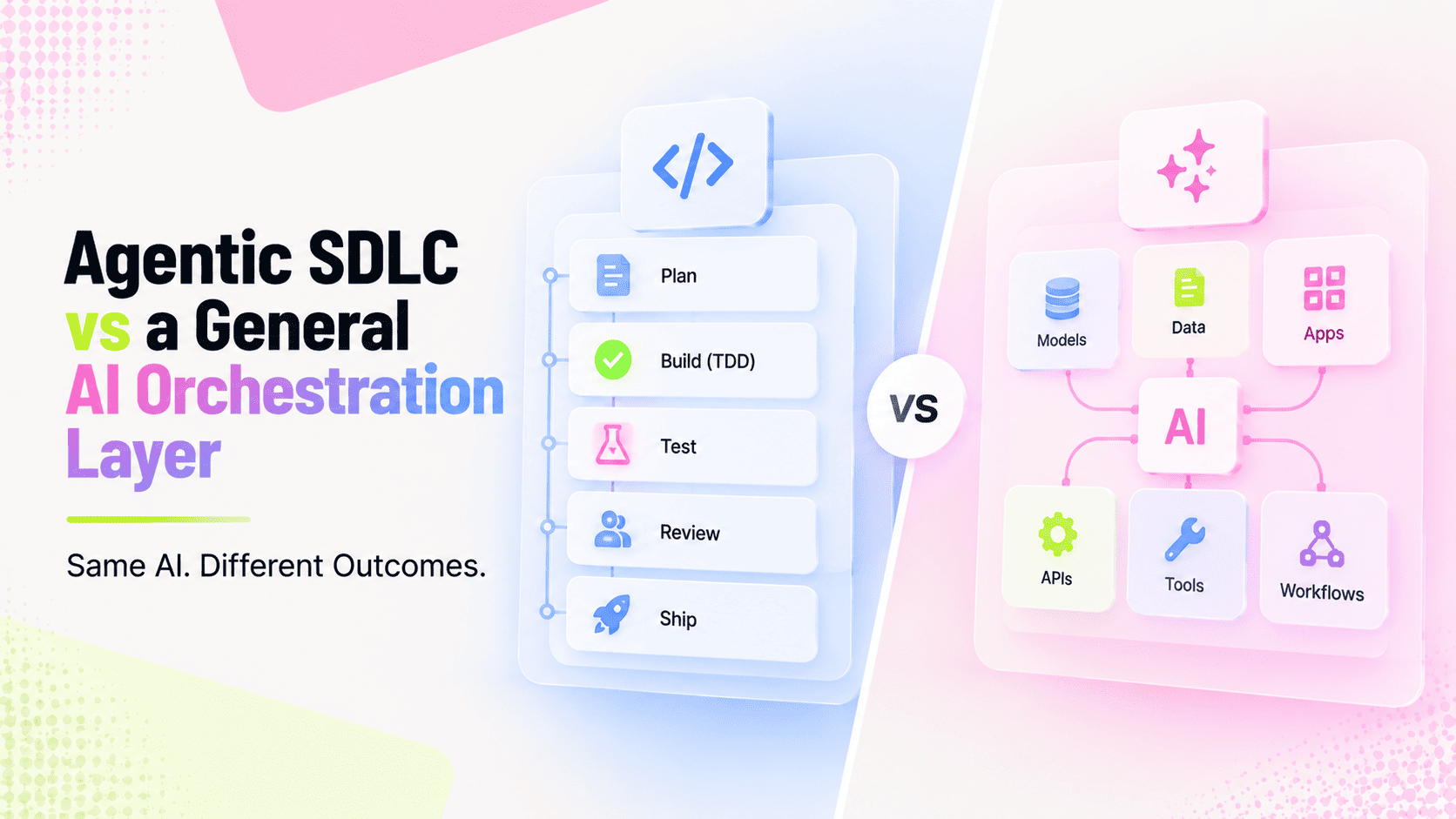
At an organizational level, the shift is from “developer uses an AI tool” to “team operates an AI delivery layer.” Instead of individual engineers deciding when and how to use AI, teams assign work to the best-suited agents within a governed system integrated with their existing engineering workflows. Exadel Colleague provides one example of this model in practice, with autonomous agents executing defined software delivery work within existing engineering workflows.
That doesn’t mean handing over the entire SDLC to autonomous agents. Different stages require different levels of human involvement. Agents are well suited to bounded, repeatable work where the task, its context, expected outcome, and validation criteria can be clearly defined. This includes implementing scoped changes, generating and running tests, fixing identified defects, updating documentation, and preparing work for human review.
Human judgment remains critical where decisions involve ambiguity, architecture, business priorities, risk, or accountability. Engineers still define what good looks like, set the boundaries within which agents operate, review work where appropriate, and retain full responsibility for what enters production.
So the defining feature of an agentic SDLC is not that everything becomes autonomous. It’s that autonomy becomes part of the delivery model itself.
Six Dimensions That Change in an Agentic SDLC
The difference goes beyond who (or indeed what) performs the work. Agentic software delivery changes how teams think about throughput, quality, cost, governance, scalability, and how they measure productivity.
Throughput: from sequential work to parallel execution
Traditional software delivery is largely constrained by human capacity. A developer picks up a ticket, completes the work, and moves on to the next. Increasing throughput usually means making developers more productive, reprioritizing work, or adding more people.
Agents introduce another option: parallel execution. Multiple agents can work on different tickets or delivery tasks at the same time. Where the work is sufficiently bounded and well defined, throughput can increase without engineering headcount increasing at the same rate. But agentic delivery doesn’t necessarily get rid of bottlenecks. It just gives teams another way to move, or remove, them, without adding more people. When agents execute multiple tasks in parallel, the constraint may simply shift to human review, approvals, testing environments, or deployment controls.
Quality: from testing as a stage to validation built into the work
Testing traditionally follows implementation and draws on the same limited human capacity. That creates bottlenecks and more opportunity for defects to slip through. Agents can build validation into the work itself. They can generate and run tests, check their output against defined acceptance criteria, and address failures before moving forward. Test-driven development (TDD) can also become a required gate in the workflow rather than simply a recommended practice.
That doesn’t mean agent-generated work is inherently higher quality. Faster code generation can create more work downstream if it also introduces defects or technical debt. The advantage comes from making validation repeatable and harder to skip. An agent can run the same checks every time it makes a change, respond to failures, and repeat the cycle before handing the work over for review. This shifts more quality control earlier in the delivery process, rather than relying on defects to be caught later by QA or reviewers.
The result is also easier to measure. Teams can track test pass rates, defect escape rates, rework, and how often human reviewers send agent-generated work back for correction.
Cost: from headcount economics to compute economics
Traditional delivery capacity is closely tied to engineering headcount. More work generally requires more people, more time, or both. Agentic delivery adds compute to the equation. The question becomes how much validated engineering work can be completed for a given combination of human effort and AI compute—not simply how many engineers are available.
That doesn’t make human engineering cost irrelevant, but it does change the calculation. Teams need to consider how much human effort agents remove, what the compute costs, and how much human oversight is still required. Cheap compute means little if an engineer then spends a lot of time reviewing, correcting, or reworking the result. The real economic payoff comes when agents can complete useful, validated work with less human effort overall.
Governance: from human process to auditable agent activity
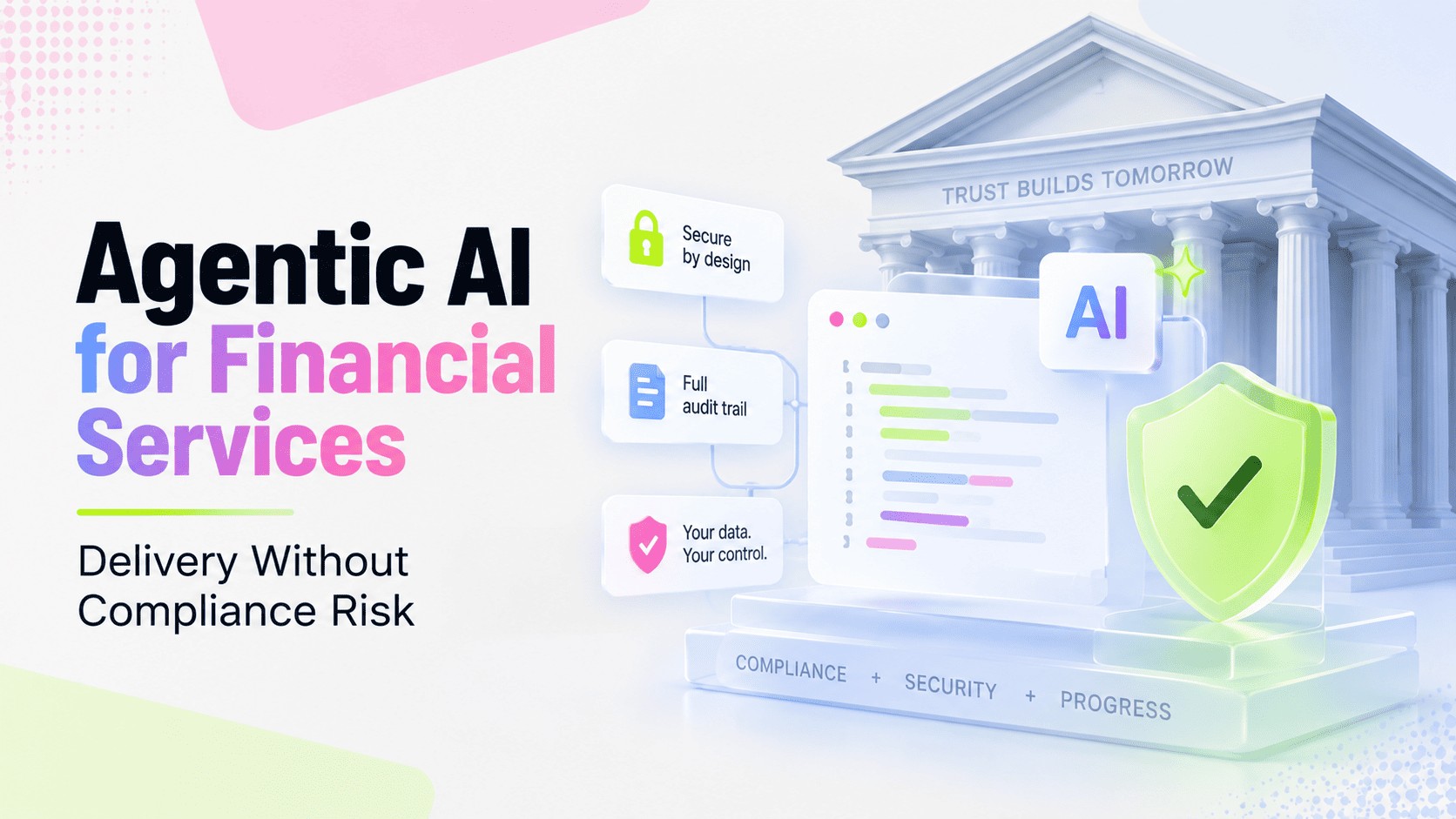
More autonomy makes governance more important, not less. Teams need to know what an agent did, what it had access to, what it produced, and who approved the result. That traceability needs to be built into the delivery system. Agent actions, outputs, approvals, and handoffs should leave an audit trail that supports attribution, accountability, and compliance. The key difference is that governance has to keep pace with autonomous execution. If an agent can make changes, call tools, or move work forward without continuous supervision, you need to define its permissions and approval points before it is allowed to act.
Scalability: from hiring capacity to execution capacity
Engineering capacity is difficult to scale quickly. Hiring takes time, while asking the existing team to absorb more work eventually creates another bottleneck. Agents offer another way to expand capacity. Once a task or workflow is defined for autonomous execution, teams can assign more work without adding human capacity on a one-to-one basis.
That doesn’t make capacity unlimited. As agent execution scales, the surrounding system has to scale with it. More work may create more demand for human review, testing environments, infrastructure, approvals, or release capacity. The advantage is that teams can separate execution capacity from headcount and then see more clearly where the next constraint lies.
Hiring and onboarding engineers takes time. Once an agentic workflow has been proven and governed, additional capacity can be introduced without going through the same hiring and onboarding cycle.
ROI visibility: from activity metrics to economic output
Story points and velocity tell teams how much work is moving through development. They say much less about the economics of that work. That matters more once delivery capacity is no longer tied directly to headcount. Teams need to know not just how much work agents complete, but what that additional capacity costs and how much human effort it actually saves.
Agentic delivery makes the relationship between human effort, compute cost, and completed engineering work easier to measure. Human Equivalent Hours (HEH), for example, estimates the human engineering time that would otherwise have been required to complete work performed by agents. Comparing that with the cost of running those agents gives teams a clearer view of the capacity created—and what that capacity costs.
Making the Shift to an Agentic SDLC
The goal of SDLC transformation isn’t to deploy agents everywhere at once. First, you need to identify where they can safely do useful work and what needs to be in place for them to succeed.
Phase 0: assess the backlog first
Before you change the delivery system, assess the work already moving through it. The goal is to identify which tasks have enough context for agents to handle—and where gaps could prevent reliable execution. Start with the backlog. Are the Jira tickets sufficiently detailed? Are acceptance criteria clear and consistent? Is the definition of done explicit? Can an agent determine what needs to change and how to validate the result without relying on human help?
Consider a ticket to update an API endpoint with clearly defined acceptance criteria, existing test coverage, and documented dependencies. The agent has a clear objective, enough context to make the change, and a way to validate the result. A ticket that simply says “improve checkout performance” is different. The desired outcome may be clear at a business level, but the cause, scope, trade-offs, and appropriate solution still require investigation and judgment. Complexity isn’t the only factor in determining whether a task is ready for an agent. The agent must also have enough context to act and a reliable way of knowing when the job is done.
Prepare the work, not just the technology
Agents perform best when the tasks they receive have clear boundaries and verifiable outcomes. So the clearer and more consistent your delivery practices are, the better equipped agents are to do the work. Teams need consistent Jira hygiene, clear acceptance criteria, an explicit definition of done, and enough technical context for agents to act independently. Testing and validation criteria must also be clear enough so agents can confirm that the work is done.
The idea is not to redesign the entire SDLC. You just want to do enough for suitable work to be assigned, executed and verified by agents.
What the first 90 days can look like
The transition should be incremental. Start with bounded work, see what works, and expand autonomy from there.
First 30 days: Assess backlog readiness, identify suitable use cases, establish a delivery baseline, and prepare a small set of well-defined tasks for agents to handle.
Days 31–60: Put the agents to work within your existing engineering workflows. Measure the results, identify where human intervention is still necessary, and refine the instructions, controls, and validation criteria based on what you learn.
Days 61–90: Expand the agents to additional tasks or stages where the evidence supports it. You can standardize successful patterns, strengthen governance, and begin measuring the impact on throughput, quality, cost, and engineering capacity.
By day 90, you should have a working, governed delivery model with clear evidence of where autonomy creates value and where humans still need to stay in the loop.
Common Misconceptions About Agentic SDLC
Agentic SDLC is still relatively new, so greater autonomy is often mistaken for less human involvement. It’s also easy to underestimate what agents can actually do. Here are three misconceptions worth clearing up.
“It replaces engineers”
No, it doesn’t. It changes what engineers spend their time on. Agents can take on well-defined, repeatable work, while engineers provide the context, judgment, oversight, and accountability that software delivery still relies on. The goal is to expand engineering capacity, not eliminate the engineers.
“It only works for simple tickets”
Simple, well-defined tickets are an obvious place to start, but they aren’t the limit. Agents can handle more complex work when the objective is clear, the necessary context is available, and the outcome can be validated. Complexity isn’t the real constraint. What matters is whether the work can be clearly defined and reliably verified.
“It requires a new tech stack”
Agentic SDLC doesn’t require teams to replace the tools and systems they already use. Agents can work within existing engineering workflows and across tools such as Jira, source control, CI/CD pipelines, and testing frameworks. A Jira-native approach is one example. Work can be assigned through the same tickets teams already use, while agents execute tasks across the wider delivery toolchain.
What changes is not necessarily the stack itself, but how work moves through it and who—or what—does the work.
Is Your Team Ready for an Agentic SDLC?
You don’t need to have every part of your SDLC optimized, but how you currently do things will determine where you can start and what agents can realistically take on. Five questions can help you determine whether you’re ready to move forward.
1. Is enough of your backlog well defined?
Agents need work they can understand and act on. Look for tickets with clear requirements, sufficient context, acceptance criteria, and an explicit definition of done. If much of the backlog still depends on engineers filling in the gaps, that will need attention first.
2. Can the outcome be independently validated?
Autonomy works best when an agent can determine whether it has successfully completed the task. That might mean automated tests, acceptance criteria, quality gates, or another objective way to verify the result. If success ultimately depends on someone saying, “That looks about right,” the task probably isn’t a good candidate yet.
3. Are your engineering tools and workflows accessible to agents?
Agents require more than a ticket. They may need controlled access to source code, testing tools, CI/CD pipelines, documentation, and other parts of the delivery toolchain. You don’t need a special “AI-ready” stack, but agents do need to be able to work safely within the one you already have.
4. Do you know where humans need to stay involved?
Autonomy must have boundaries. Teams should know which actions agents can take autonomously, which require review or approval, and where a human needs to make the final call. Those boundaries don’t have to be identical for every task, but they do need to be explicit.
5. Can you measure whether it’s working?
Before you introduce agents, establish what you’ll compare their performance against. That could include delivery time, human effort, quality, cost, or throughput. Without that baseline, you won’t know whether they’re improving delivery or not. Readiness is rarely uniform across an entire engineering organization. One team may have strong automated test coverage, disciplined ticketing, and well-documented services, while another relies heavily on manual testing and undocumented knowledge. Even within the same backlog, some types of work will be much better suited to agents than others.
That’s why the objective isn’t to declare the organization “agent-ready” or “not agent-ready.” The value lies in identifying where autonomy can work right now and what needs to change before you take it further.
Know Before You Commit
You don’t need a “yes” to all five questions before you start. A readiness assessment can show you which parts of your backlog are suitable for agents and where the best opportunities lie.
It also establishes a baseline for measuring what happens next. The result will provide enough evidence to make practical decisions: where to introduce autonomy, what to fix first, and whether the expected value justifies moving forward.
Written by: Alexey Girzhadovich, Chief Enterprise AI and Solutions Officer
September, 2026


Your AI Partner
If you're ready to find out where agentic delivery could work for your team, start with a readiness assessment before committing to a broader rollout.