
Tags
Share
The pressure to deliver software faster is nothing new, but AI is forcing us to redefine what “faster” means. By helping teams produce code faster, AI piles the pressure on engineering leaders to turn that advantage into faster delivery. Coding assistants can help with the first part. The challenge is carrying that speed through the rest of the software delivery process.
This makes the choice of platform more consequential. For CTOs and VPs of Engineering, that creates a practical question: what will actually turn faster coding into faster software delivery? The answer depends on what the platform orchestrates, how it fits into the software development lifecycle (SDLC), what controls it applies, and how its contribution can be measured.
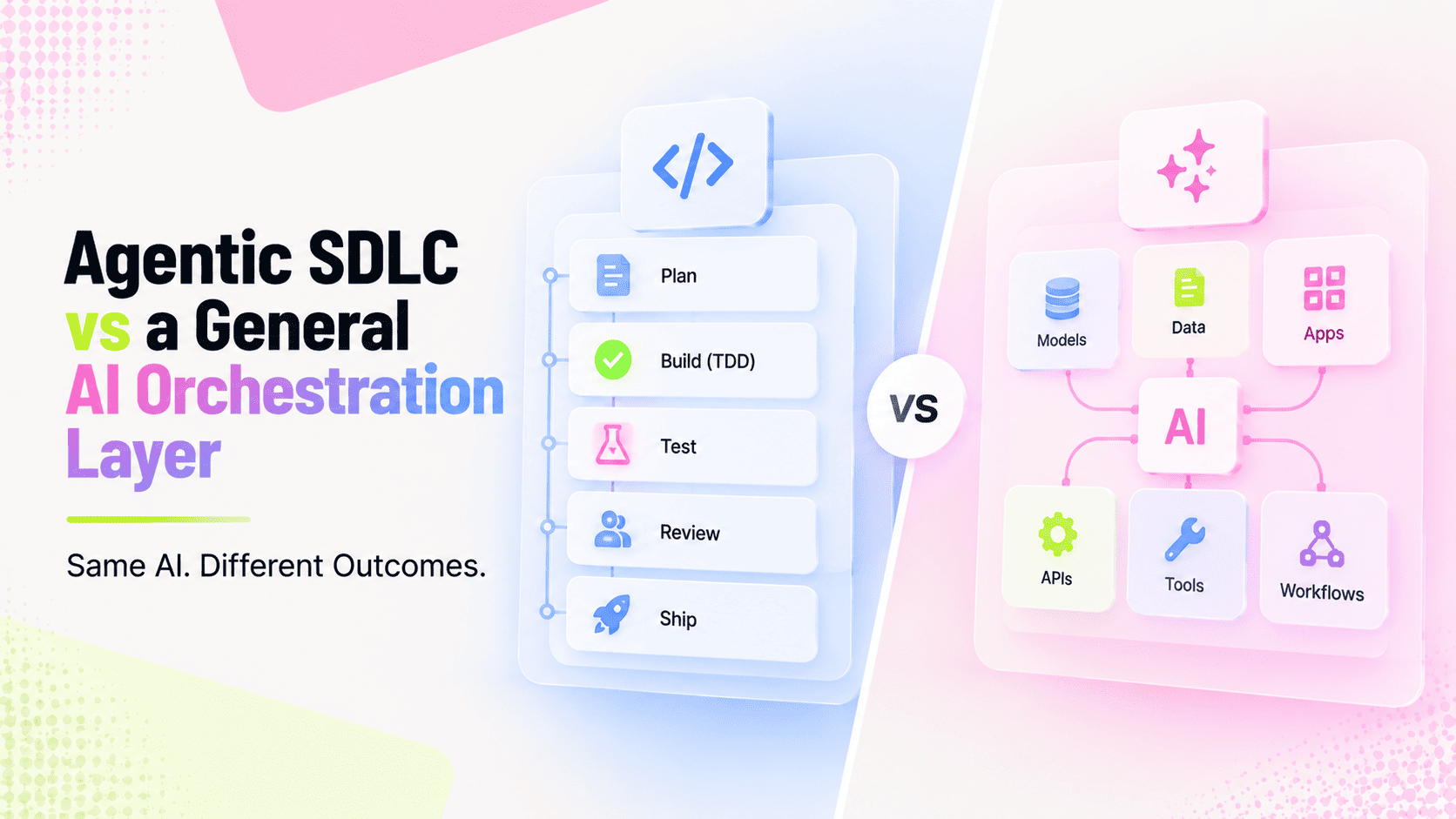
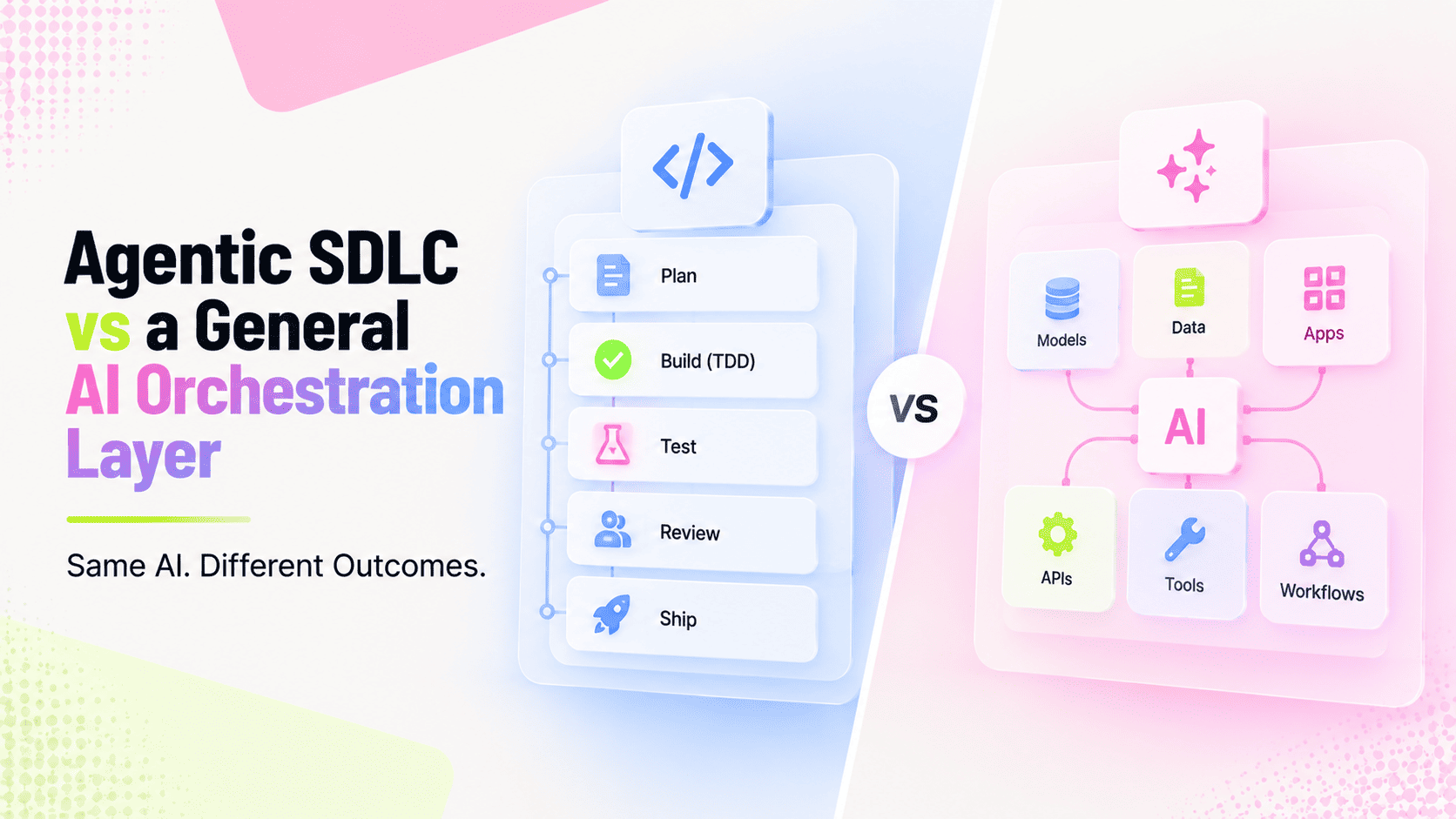
EPAM DIAL and Exadel Colleague both bring orchestration to enterprise AI, but they approach the problem from different directions. DIAL is a broad enterprise AI orchestration platform for building and integrating AI-enabled applications and workflows. In contrast, Colleague is purpose-built around agentic software delivery, taking suitable Jira tickets through test-first implementation to a pull request for human review.
For buyers evaluating an EPAM DIAL alternative, that difference in scope matters. The useful comparison is not which platform has more AI capabilities, but how much of the agentic software delivery system each provides out of the box.
What EPAM DIAL Does: An Honest Overview
EPAM DIAL, or Deterministic Integrator of Applications and LLMs, is an open-source enterprise AI orchestration platform. It combines large language models with deterministic code and provides a common environment for integrating models, applications, APIs, data stores, and custom add-ons.
That breadth is central to the DIAL proposition. EPAM positions the platform for AI-enabled business solutions across a range of enterprise use cases rather than solely for software development. Its API-first architecture allows organizations to build custom applications using frameworks such as LangChain, LlamaIndex, Semantic Kernel, or even their own code. DIAL also brings together components for routing, rate limiting, monitoring, load balancing, and deployment.
DIAL is designed for flexibility. Because it’s cloud-agnostic, it supports dozens of commercial and open-source LLMs. It can also be deployed on the client’s chosen infrastructure. EPAM places an emphasis on model portability, which allows applications to move between models and reduces vendor lock-in.
Those are meaningful advantages when you’re building an enterprise AI layer across multiple applications and business processes. DIAL can also form part of a broader EPAM-led AI environment. EPAM includes DIAL within its AI/Run toolset, combining it with other platforms, engineering practices, and delivery services to support AI adoption at scale. Software engineering forms part of that picture. EPAM uses DIAL within its AI-native engineering ecosystem and has deployed it to support development use cases, including custom code agents.
But DIAL was built to orchestrate AI across a broad range of enterprise use cases, not specifically around software delivery. When the requirement narrows to autonomous software delivery, that distinction shifts into focus: DIAL provides the orchestration foundation, while the specialized software delivery workflow is built around it.
Where Enterprise Teams Hit Limits With EPAM DIAL
DIAL has proven that it can support software engineering use cases. But engineering leaders still need to know how much of the software delivery operating model comes with the platform and how much needs to be designed around it.
Software delivery is not the organizing principle
DIAL is intentionally broad. It provides infrastructure for models, applications, agents, data, APIs, and enterprise workflows. EPAM also provides built-in libraries designed to accelerate parts of the enterprise SDLC.
That flexibility is useful when an organization wants one foundation for many AI use cases. But autonomous software delivery introduces narrower requirements. An agent needs to understand the unit of work, interpret acceptance criteria, operate against the relevant repository, follow engineering standards, validate its implementation, and package the result for human review.
DIAL provides the building blocks from which organizations can construct such workflows. What it does not present itself as is a dedicated, end-to-end agentic SDLC platform. The distinction is therefore largely one of build versus built-in: how much of the delivery harness does the organization want to design and maintain itself?
TDD depends on the delivery workflow
Testing makes that distinction clearer.
An organization can build test-driven engineering practices around a flexible orchestration platform. But supporting testing is different from making test-first development part of the autonomous delivery architecture. EPAM’s public DIAL documentation doesn’t describe TDD or BDD as an enforced part of the software delivery process. DIAL provides the orchestration environment; the engineering workflow built around it determines how those controls are applied.
For teams comparing agentic SDLC approaches, that creates a practical question: Is test-first development something the team configures around the AI, or something the agentic delivery architecture enforces?
Model flexibility is not the dividing line
It would be inaccurate to argue that DIAL’s limitation is model choice.
DIAL supports multiple public, proprietary, and open-source models. It also provides complex query routing and allows applications to move between models, reducing the risk of vendor lock-in. Both DIAL and Colleague can work across multiple models. The meaningful difference between the two lies in what the orchestration layer does with the models.
DIAL is not dependent on an EPAM engagement
There’s one more distinction that needs qualifying. DIAL doesn’t require an EPAM delivery contract. It’s open source, and EPAM states that its source code is free and can be deployed on infrastructure chosen by the client. EPAM also brings implementation experience from deploying DIAL across different industries and offers guidance on best-practice implementations. But those services are not a prerequisite for using the platform.
For an enterprise evaluating agentic software delivery, the question comes down to the following: do they want to construct the SDLC workflow around a broad AI orchestration platform or start with one purpose-built for software delivery?
The TDD-First, Jira-Native Alternative
Exadel Colleague starts from the second position.
Colleague is a multi-agent SDLC platform designed to operate as an asynchronous member of the engineering team. Instead of a developer prompt, Colleague starts with an existing Jira ticket. Colleague analyzes the story, creates the required tests, implements the change, validates the result, and prepares the work for human review. Exadel describes this distinction as Story-to-Code rather than Prompt-to-Code. Colleague takes the business user story and deftly turns it into the technical tasks, tests, and code needed to complete the work.
Work starts where the team already works
Colleague is built into every Exadel engagement and integrates with Jira and Git in approximately two to four hours. There is no separate AI development environment for engineers to adopt before work can begin. A suitable ticket can be assigned to Colleague in Jira much as it would be assigned to another team member. Colleague then works asynchronously in the background, interacting through the team's existing Jira and Git workflows.
That moves AI beyond the developer-tool model. Developers do not need to remain continuously in the flow, prompting the system through every stage. The ticket becomes the unit of delegated work.
Tests come before implementation
Colleague also makes TDD and BDD part of the delivery architecture rather than leaving test-first development to team practice.
A dedicated Testing Agent generates TDD and BDD tests before the Programming Agent implements the feature or fix. The implementation is then validated against those tests before Colleague packages the changes into a pull request. Engineers remain responsible for reviewing and approving the work.
The distinction matters because quality controls do not depend on an individual developer or project team remembering to impose test-first discipline on AI-generated work. Tests come before code because the workflow is designed that way.
Model choice sits underneath the SDLC
Colleague is both agent- and model-agnostic. Its orchestration layer can work across different coding agents and LLMs while retaining the same SDLC controls above them. It also supports private-cloud, on-premises, and BYOK deployment.
Again, the distinction from DIAL is not simply model choice. Both platforms are designed to provide flexibility across models. Colleague applies that flexibility underneath a purpose-built software delivery architecture.
Measuring engineering output rather than AI activity
Agentic delivery also creates a measurement problem. Tokens consumed, prompts submitted, and model usage show how much AI an organization used. They don’t necessarily show how much useful engineering work it completed.
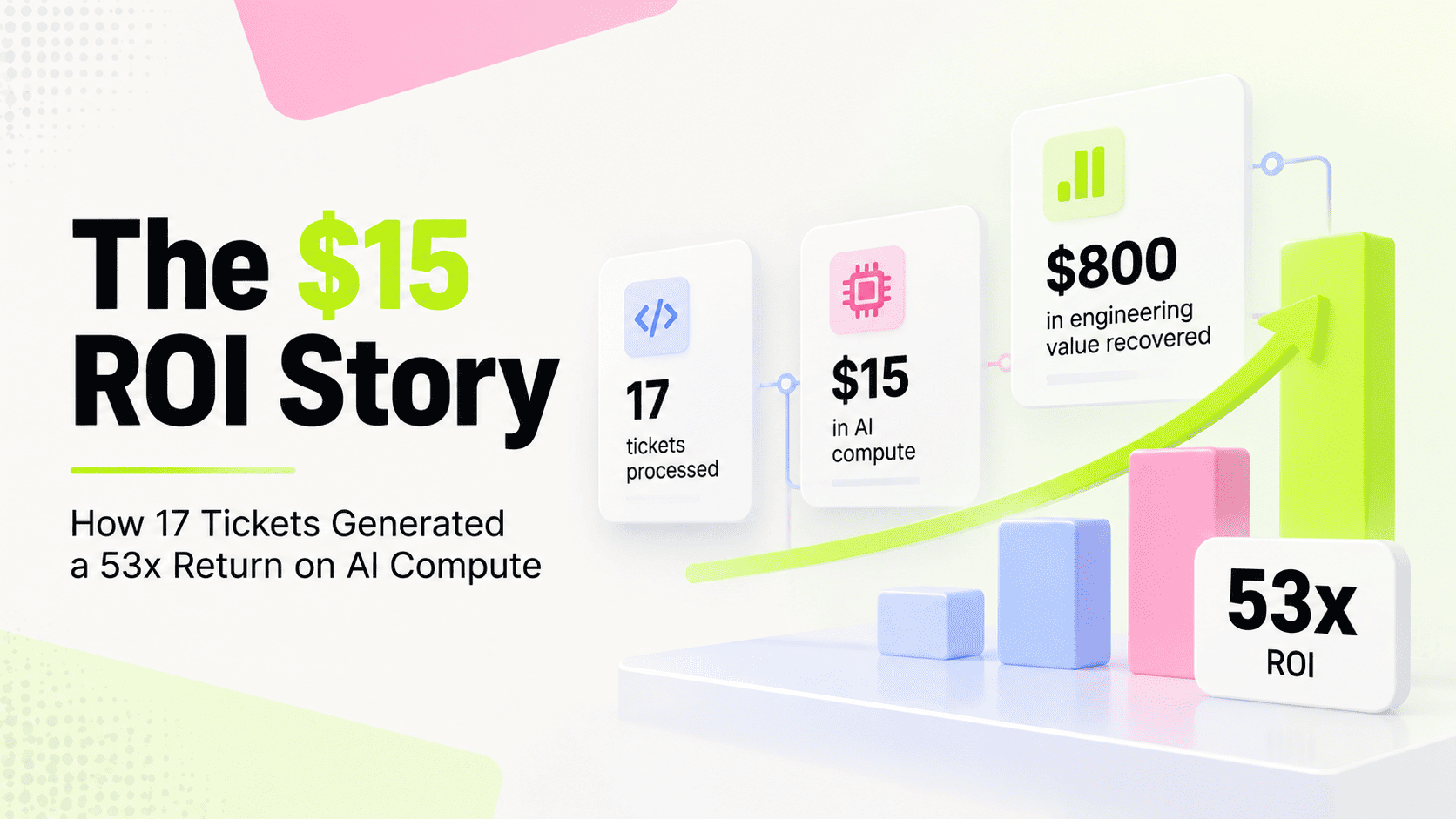
Colleague measures autonomous delivery against engineering outcomes, including ticket-level results and Human-Equivalent Hours (HEH). HEH measures productive engineering work completed by AI that would otherwise have required human effort. Live Colleague engagements have recorded more than 100 HEH per project, providing engineering and business leaders with a way to measure autonomous delivery in terms of capacity created rather than AI activity alone. [suggested placement for suitable case study]
Side-by-Side Comparison: 8 Criteria
DIAL and Colleague overlap in areas including enterprise deployment, model choice, and orchestration. The differences become much clearer when the comparison is narrowed specifically to agentic software delivery.
TDD/BDD is not documented as a mandatory SDLC gate; testing depends on the delivery workflow built around DIAL
TDD/BDD is built into the delivery architecture; tests are generated before implementation
API-first architecture supports integration with enterprise applications and workflows
Jira-native delegation; Jira and Git integration typically takes 2–4 hours
Public DIAL materials emphasize client-controlled infrastructure and broad model access, but do not explicitly position BYOK as a standard feature
BYOK supported as a standard deployment option
Open source and deployable on client-chosen infrastructure
Private-cloud and on-premises deployment supported
Supports multiple public, proprietary, and open-source LLMs, with routing and model portability
Agent- and model-agnostic orchestration across coding agents and 100+ LLMs
Public product materials emphasize platform monitoring and orchestration rather than ticket-level engineering ROI
Ticket-level outcomes and Human-Equivalent Hours (HEH) measure autonomous engineering output
Depends on the applications, integrations, and workflows being implemented
Jira and Git integration typically takes 2–4 hours and works within existing team workflows
No EPAM engagement required; DIAL is open source and can be deployed independently
Built into every Exadel engagement
Comparison based on current public EPAM DIAL documentation, current Exadel Colleague product information, and Exadel deployment and benchmarking data. Product capabilities and delivery models may change.
The above table points to a broader distinction. DIAL's breadth is not necessarily a disadvantage, and Colleague's specialization is not inherently an advantage.
If the objective is to establish a common AI orchestration foundation across many enterprise use cases, DIAL's flexibility proves valuable. On the other hand, Colleague is a better fit if the objective is narrower—such as delegating software delivery work to autonomous agents while preserving Jira/Git workflows, test-first engineering, human review, and measurable engineering output.
Who Should Use Each: An Honest Assessment
A credible EPAM DIAL vs. Exadel Colleague comparison shouldn’t end by declaring one platform universally superior. The two products have different centers of gravity.
EPAM DIAL may be a good fit when...
DIAL is a strong candidate for organizations looking to create a broad enterprise AI orchestration layer.
Its open-source model, cloud-agnostic architecture, API-first approach, model portability, and support for custom applications make it well suited to enterprises that want to build a portfolio of AI-enabled applications and workflows on a common foundation. It may be particularly attractive to organizations already working with EPAM and looking to draw on EPAM's implementation experience and standardized AI tooling. But an EPAM services contract is not a prerequisite for using the open-source platform.
The trade-off is that an organization seeking autonomous software delivery may need to build or configure more of the SDLC-specific orchestration and controls around that foundation.
Exadel Colleague may be the better fit when...
Colleague is designed for organizations whose immediate challenge is increasing software delivery capacity.
It fits particularly well when the requirement includes test-first agentic execution, ticket-driven asynchronous work, Jira and Git integration, human review, private deployment, model flexibility, and ROI measurement tied directly to engineering output. That narrower specialization also means organizations don’t have to begin by constructing an autonomous SDLC workflow from more general orchestration components. The workflow itself is the product.
The decision essentially comes down to what the organization is trying to orchestrate. DIAL offers a flexible foundation for AI applications and workflows across the enterprise. Colleague is purpose-built to orchestrate agentic software delivery. For a CTO or VP of Engineering making that procurement decision, one question may therefore matter more than any individual feature:


Your AI Partner
How much of the agentic software delivery system do you want to build yourself, and how much do you want the platform to provide?
Compare Exadel Colleague against your current agentic tooling in a live 30-minute demo.