
Tags
Share
The AI-First Alternative
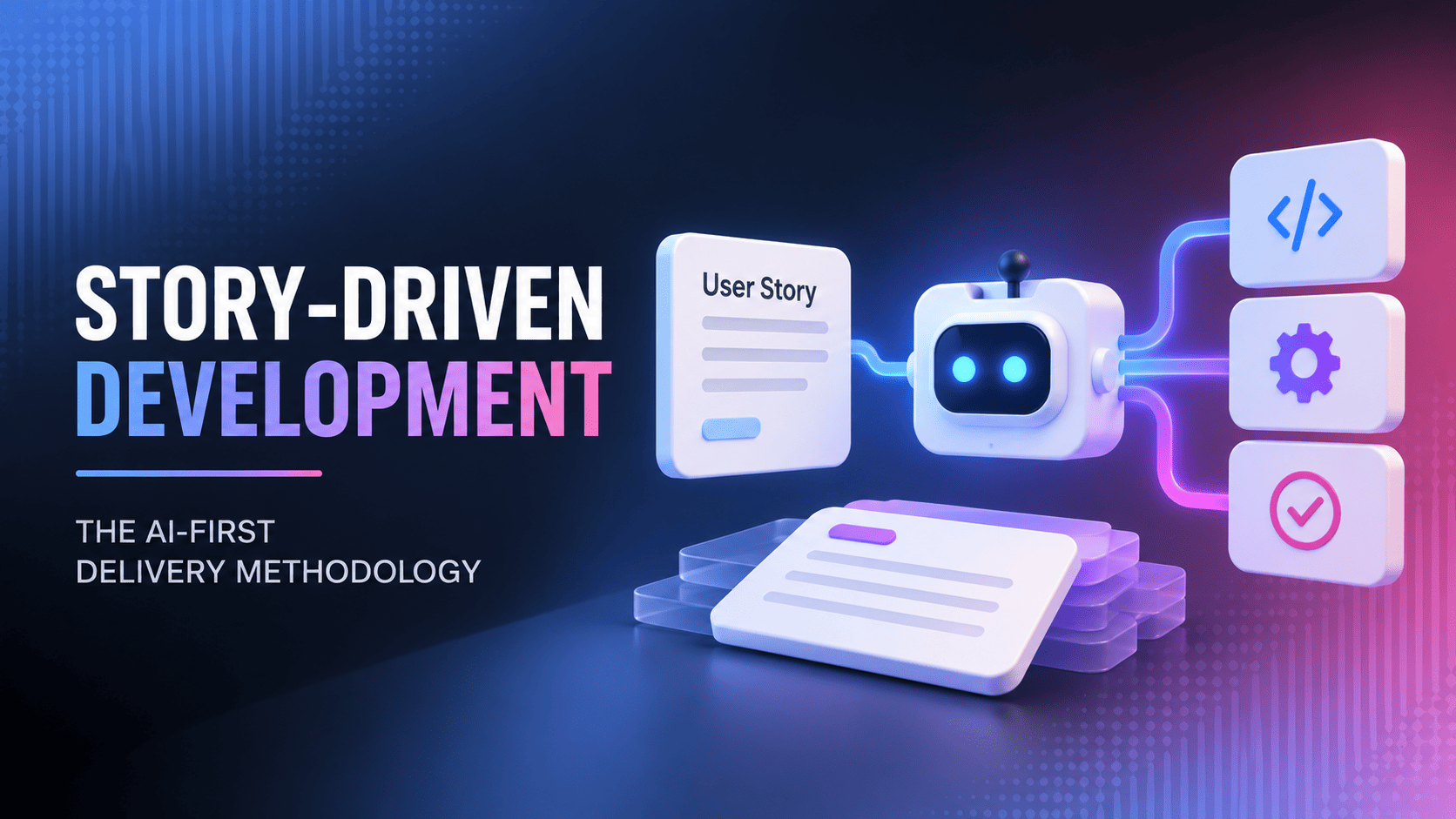
Story-Driven Development for Agentic SDLC is an AI-first software delivery methodology in which autonomous AI agents accept Jira user stories as their primary input without requiring technical prompts or developer intervention, and use a Business Analyst agent to firm up requirements and break the story into executable tasks before any code or tests are generated.
Instead of developers translating business requirements into prompts, Story-Driven Development relies on Jira user stories as the authoritative input for autonomous software delivery. An AI agent can now autonomously execute governed engineering workflows directly from approved business requirements.
Story-Driven Development answers one question: how should autonomous work begin? Agentic SDLC answers the next: how should that work be delivered safely and at enterprise scale? Together, they establish a story-driven SDLC in which business requirements initiate governed autonomous software delivery.
Why Story-Driven Development Exists
The problem with prompt-to-code misalignment
Large language models have made code generation remarkably accessible yet most AI coding workflows still depend on one fragile input: the prompt.
The quality of the output often depends on how well a developer can describe the work. Two engineers can begin with the same requirement but produce different implementations because they phrased their prompts differently or omitted important context.
This creates several problems for enterprise software delivery:
- prompts are difficult to standardize across teams
- business intent can become distorted during prompt creation
- requirements may be interpreted inconsistently
- delivery becomes dependent on individual prompt-writing skills
- prompt histories are difficult to govern and audit
In reality, enterprise software projects already have an established source of truth. Product managers, business analysts, and engineering teams capture requirements in Jira user stories, acceptance criteria, priorities, and supporting documentation long before implementation begins.
Story-Driven Development simply removes the need to convert those artifacts into technical prompts. Instead, autonomous agents work directly from the Jira story itself.
Before implementation kicks off, a Business Analyst agent validates the requirements, identifies missing information, resolves ambiguities where possible, and breaks down the story into executable engineering tasks. Only once the specification reaches an acceptable level of quality does the engineering workflow continue.
This delivers two benefits. It reduces the risk of generating code from incomplete or poorly understood requirements while preserving the structured planning process that enterprise teams already use.
How Story-Driven Development Works
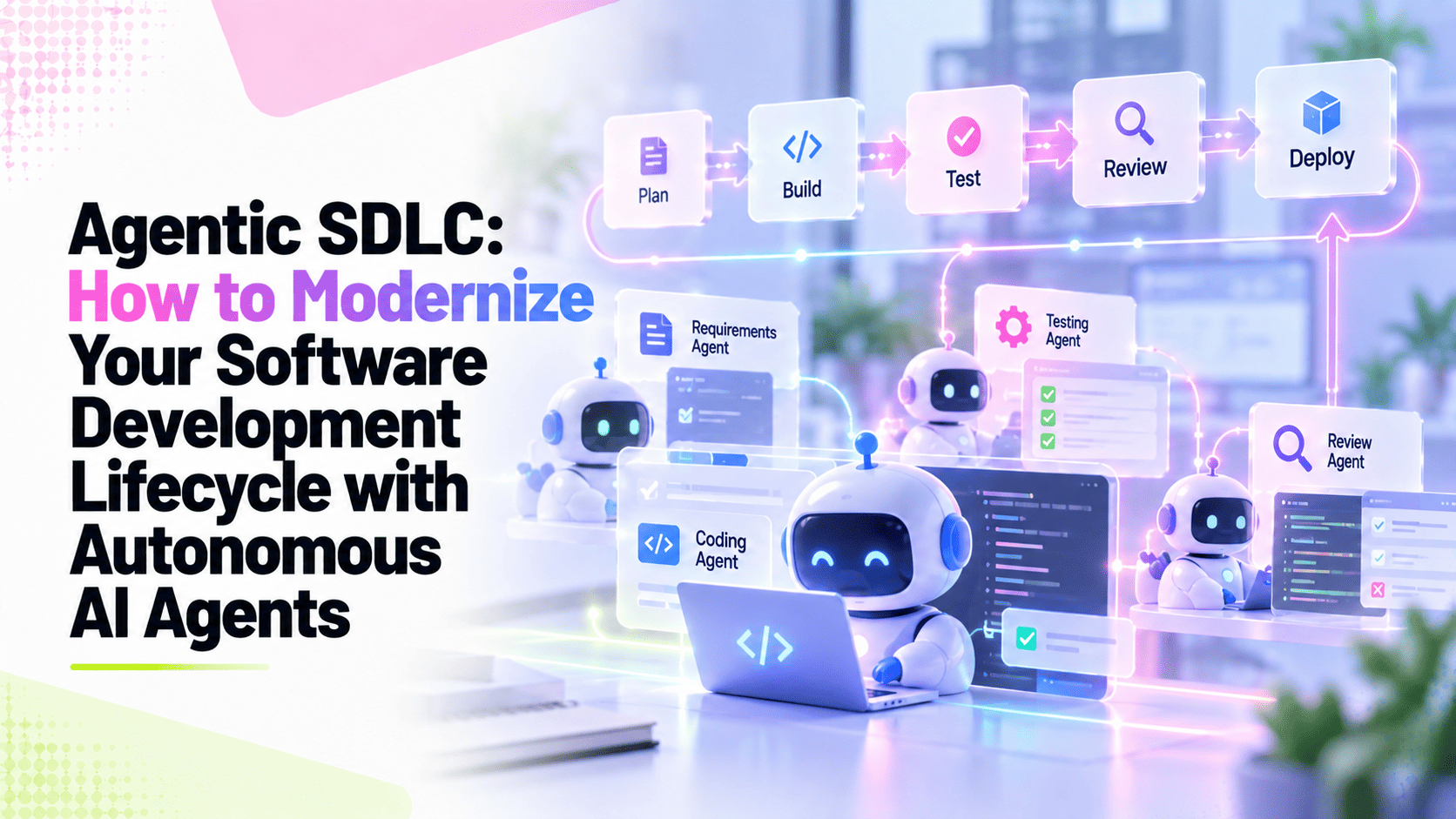
This AI-first methodology replaces prompt-driven interaction with an automated delivery workflow that begins with a business requirement and ends with a governed pull request.
A typical workflow looks like this:
1. A Jira user story is created
A product manager, business analyst, QA engineer, or team lead defines the business requirement using standard Jira practices.
2. The Business Analyst AI agent reviews the Jira user story
Rather than immediately generating code, the agent evaluates the quality of the specification. It checks acceptance criteria, identifies any ambiguities, validates completeness, and breaks the work into implementation tasks.
If the story is unclear, the workflow pauses until the missing information is resolved.
3. Engineering agents begin implementation
Once the requirements are properly defined, AI engineering agents generate implementation plans, create production-ready code, write unit tests, update documentation where needed, and prepare pull requests.
4. Quality validation runs automatically
Before work reaches developers, automated testing, static analysis, policy validation, and organizational quality checks verify that outputs meet the enterprise’s engineering standards.
5. Human review remains mandatory
Developers review the generated work, request changes if necessary, and approve the pull request before code is merged.
Throughout the process, AI accelerates structured delivery activities without replacing engineering judgment or organizational governance.
Why AI Delivery Starts with a Jira User Story
Traditional AI coding assistants rely on prompts as the primary input. Story-Driven Development AI treats the Jira user story as the primary unit of work.
This distinction changes how AI integrates into enterprise engineering.
A prompt is typically created by an individual developer for a specific coding task. It often exists outside the team's normal delivery workflow and may not be visible to product managers, QA engineers, or other stakeholders.
A Jira story already exists inside the organization's planning and governance process. It contains the business objectives, acceptance criteria, priorities, ownership, workflow status, and any links to related work. It’s shared across the delivery team, and so it provides significantly richer context than an isolated prompt.
Using the Jira story as the trigger for autonomous delivery also improves consistency. Every implementation begins from the same approved business requirement instead of an individually crafted prompt. This makes AI execution easier to audit and more closely aligned with established software delivery practices.
For engineering teams that have already adopted agentic software development, a story-driven SDLC allows autonomous AI agents to execute delivery work within their existing workflows.
Jira user story is the primary input.
Developer prompt is the primary input.
Business requirements remain the source of truth.
Requirements are translated into prompts.
Business Analyst agent validates requirements before implementation.
Code generation often begins immediately.
Workflow operates inside Jira-based delivery processes.
Interaction typically occurs inside an IDE or chat interface.
Consistent, governed workflows across teams.
Quality depends heavily on individual prompting skills.
Designed for enterprise software delivery.
Primarily focused on individual developer productivity.
Prompt-driven development still has its uses. It can be highly effective for individual coding tasks, prototyping, and experimentation, for example.
By contrast, Story-Driven Development aims to make AI delivery governed and scalable across engineering teams by treating software delivery as a workflow rather than a sequence of prompts.
Business Benefits
Because Story-Driven Development begins with the same business artifacts that teams already use, AI delivery becomes accessible to more than just software developers.
- Product managers can initiate work by creating well-defined user stories.
- Business analysts can refine requirements before implementation begins.
- QA engineers can get involved earlier by contributing acceptance criteria and validation requirements.
- Engineering teams spend less time translating requirements into prompts and more time solving higher-value technical problems such as reviewing implementations and refining architecture.
For larger enterprises, the benefits extend well beyond faster code generation. Because every implementation begins from an approved Jira user story, software delivery becomes more consistent, and far easier to trace and govern. Business requirements remain connected to implementation, quality standards are applied more consistently, and AI delivery becomes accessible to product managers, business analysts, QA engineers, and developers without requiring prompt-writing expertise.
As AI adoption increases, enterprise engineering teams need delivery methodologies that scale beyond individual developers. Story-Driven Development solves that by allowing structured business requirements to initiate autonomous software delivery.
Frequently Asked Questions
Who can trigger Story-Driven Development?
Any team member with Jira access can initiate the workflow, including QA engineers, product managers, team leads, and developers. No prompt writing, IDE, or command-line interaction is required.
Is Story-Driven Development the same as Behaviour-Driven Development?
No. Behaviour-Driven Development (BDD) focuses on specifying software behaviour through executable requirements and tests. Story-Driven Development uses the Jira user story as the trigger for an end-to-end agentic workflow that may include BDD as one stage of the delivery process.
What happens if the user story is unclear?
The Business Analyst agent identifies ambiguities and firms up the requirements before implementation begins. Rather than generating code from an incomplete specification, the workflow pauses until sufficient clarity is available.
See Story-Driven Development in Practice
Story-Driven Development defines how autonomous software delivery begins. Exadel Colleague brings that methodology to life by transforming approved Jira User Stories into governed, test-backed software delivery workflows within existing Jira and Git-based engineering processes.
See Exadel Colleague in action.
Your Agentic SDLC teammate built on Story-Driven Development.