
Tags
Share
“Your scientists were so preoccupied with whether or not they could that they didn’t stop to think if they should.”
— Ian Malcolm, Jurassic Park
AI code generation has reached its own “could vs. should” moment.
The issue is not whether AI can write code. It can — quickly, convincingly, and at a scale no human team could match manually. It can generate functions, refactor modules, propose fixes, write tests, draft documentation, and move through increasingly complex development tasks. That capability is real. It is useful. And, for enterprise engineering teams, it is already changing how software gets built.
But the more important question is what should happen before AI-generated code is allowed into the delivery pipeline.
- Should generated code move forward before the requirement is clear?
- Should implementation come before tests?
- Should the same system that wrote the code also create tests afterward to prove it works?
- Should engineers be asked to review large volumes of plausible code without a test-backed definition of success?
Of course not.
That is why TDD-first AI code generation matters.
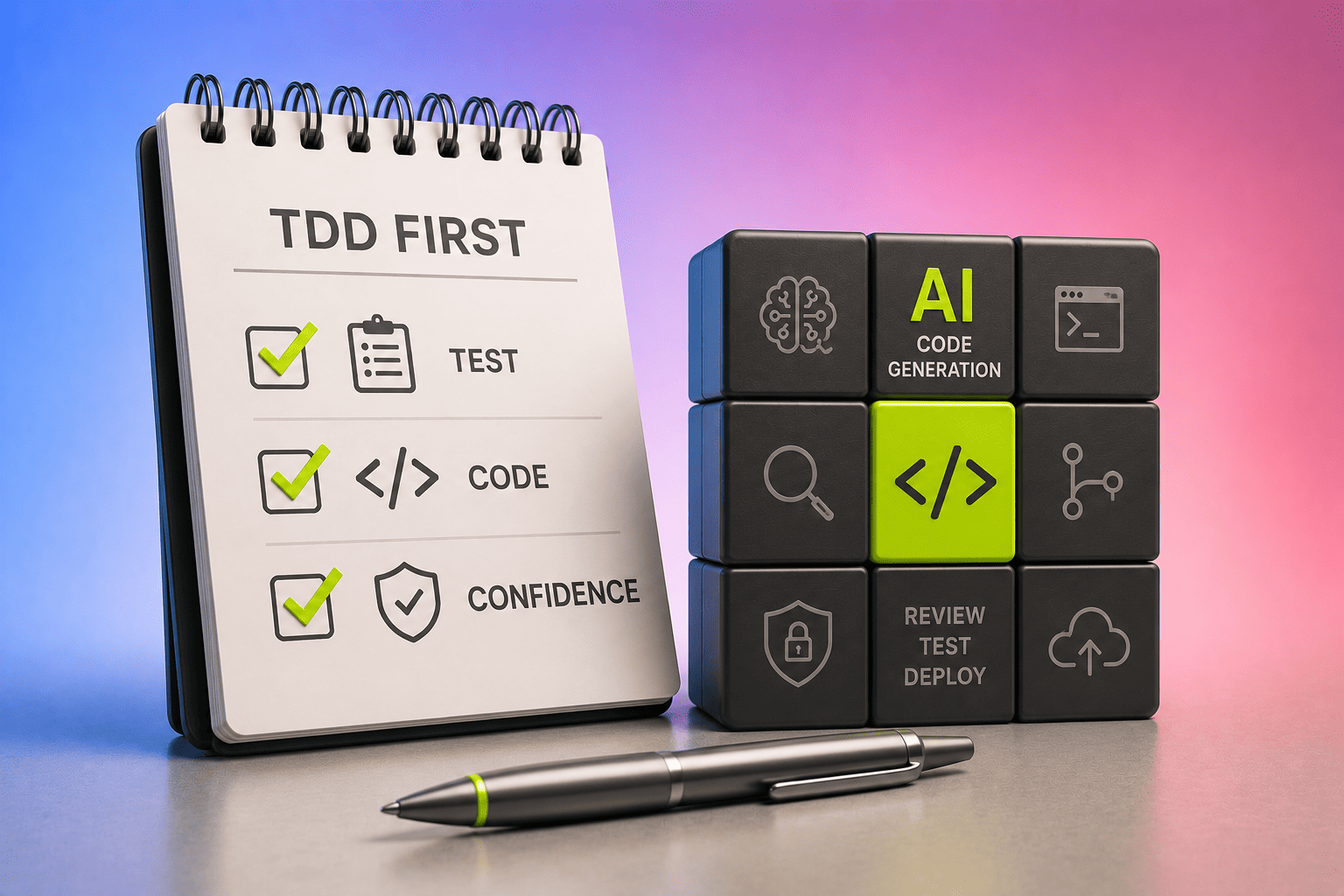
The point is not to stop AI from writing code. The point is to make sure AI-generated code is produced inside a disciplined engineering workflow: requirement first, tests second, code third, human review always.
For engineering leaders, that discipline is now one of the central questions of enterprise AI adoption. Software delivery has never been measured by code volume alone. The real questions are harder:
- Does the code satisfy the requirement?
- Does it handle the edge cases?
- Does it fit the existing architecture?
- Can another engineer review it?
- Can QA validate it?
- Can security approve it?
- Can the team maintain it six months from now?
The problem with AI-generated code is not that AI writes code. The problem is that many AI coding workflows are still code-first. A developer prompts the tool, the tool generates an implementation, and testing happens afterward. Sometimes the same tool that generated the code also generates tests to prove the code works.
That sequence creates risk.
In enterprise environments, correctness has to be defined before implementation begins. Otherwise, teams risk generating more software output than they can safely review, test, secure, and maintain.
TDD-first AI changes the sequence.
Standard AI coding starts with generated code. TDD-first AI starts with the testable definition of success.
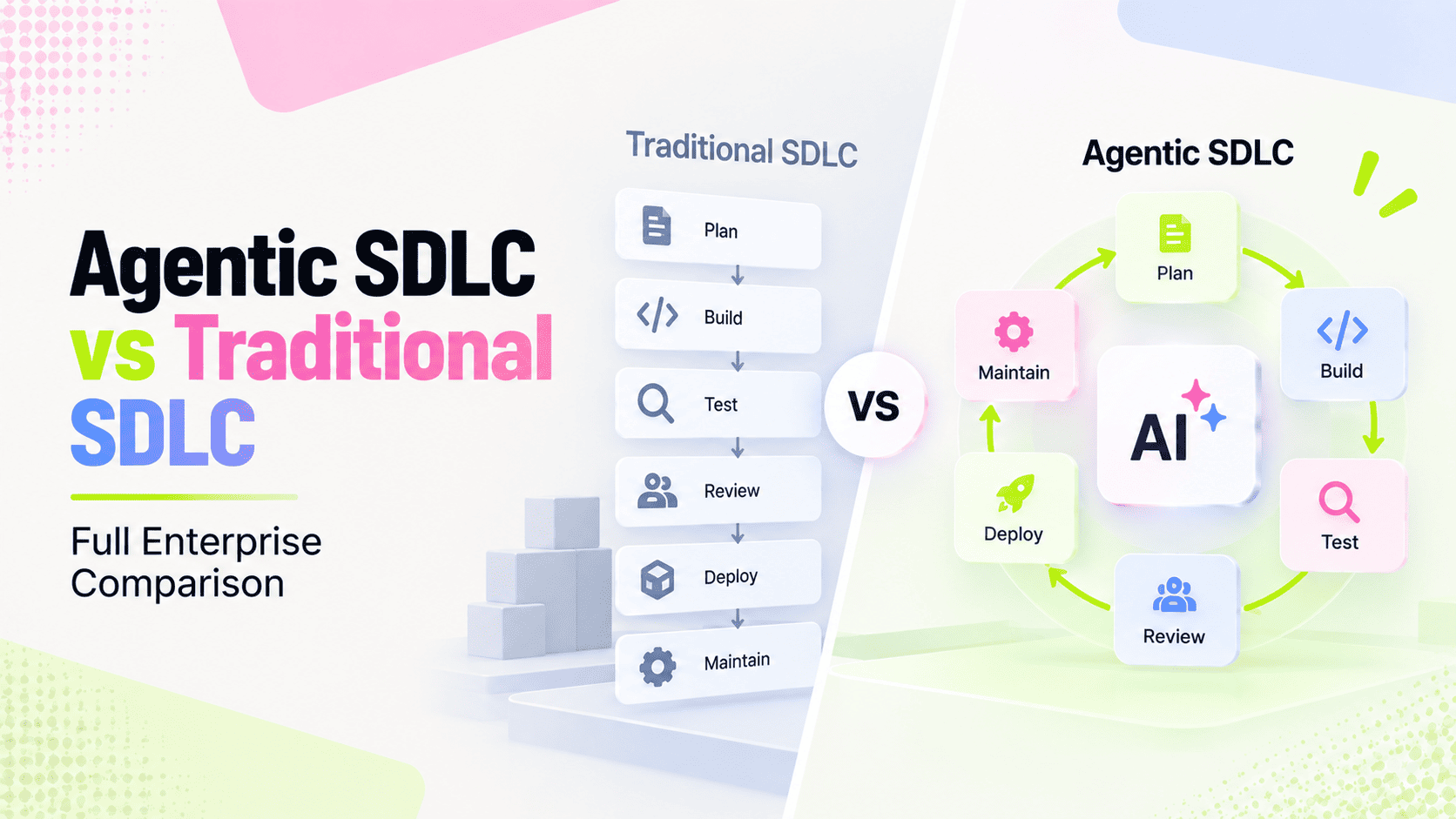
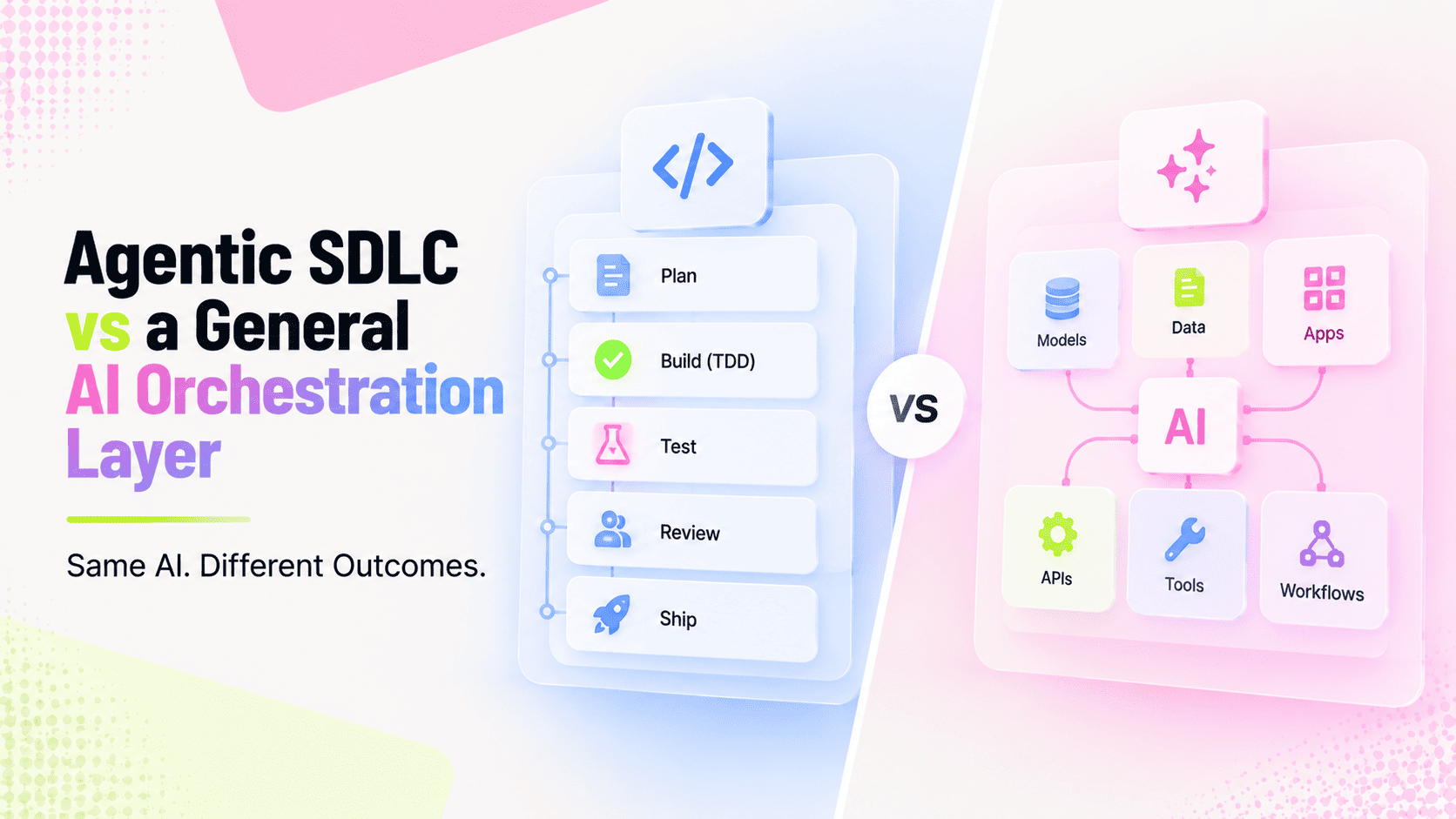
Exadel Colleague applies this principle through a governed, multi-agent SDLC workflow. Instead of acting as a prompt-to-code assistant inside an individual developer’s IDE, Colleague works as an asynchronous SDLC peer inside Jira and Git. It helps analyze user stories, generate TDD and BDD tests, implement suitable tasks, prepare pull requests, and keep engineers responsible for review, approval, and release.
That is how AI code generation becomes test-backed, reviewable, and safer to scale.
Why AI Code Without TDD Fails at Enterprise Scale
AI coding tools are useful because they reduce the friction of implementation.
A developer can ask for a function, a refactor, a test case, a data transformation, an API endpoint, or a bug fix. The tool responds quickly. The output may compile. It may look clean. It may follow recognizable patterns. It may even pass simple tests.
For individual productivity, that can be valuable. For enterprise delivery, it is not enough.
Enterprise software development is not just a coding activity. It is a coordinated delivery system involving product requirements, architecture, testing, security, compliance, documentation, deployment, support, and long-term maintenance.
Code-first AI workflows struggle in that environment for several reasons.
Prompt-to-code is not the same as requirement-to-delivery
Most AI coding assistants are still fundamentally prompt-to-code tools.
The developer gives a specific technical instruction:
- Refactor this function.
- Generate a validation rule.
- Fix this bug.
- Add tests for this method.
- Convert this logic into another language.
The tool reacts to the prompt. That can work well when the developer already knows the requirement, architecture, constraints, edge cases, and test strategy. But in enterprise teams, many problems do not arrive as clean technical prompts. They arrive as user stories, tickets, defects, compliance requests, backlog items, customer issues, or modernization tasks.
Those inputs often need interpretation. A user story may need to be refined. Acceptance criteria may be incomplete. Edge cases may be unstated. A defect may depend on a downstream system. A requirement may conflict with an existing pattern. A “small” change may affect reporting, billing, onboarding, customer data, or regulatory workflows.
That is why story-to-code matters.
TDD-first AI should not simply react to a developer’s technical prompt. It should help bridge the gap between business intent and technical specification before implementation begins.
Code-first tools move the bottleneck downstream
When AI generates code faster, the bottleneck does not disappear. It moves.
Teams still need to review the code. They still need to validate the behavior. They still need to check security, architecture, maintainability, and integration. They still need to understand whether the generated output is suitable for the existing system.
If testing happens after implementation, the team may only discover late in the process that the code does not match the requirement.
That creates rework.
Worse, if the code looks plausible, the team may underestimate the review burden. Engineers then spend time reading and correcting generated output instead of designing better systems, resolving hard architectural questions, or building higher-value features.
This is one reason AI code generation can create frustration inside mature engineering teams. The tool appears to save time at the point of writing code, but it can add time at the point of review and validation.
Tests written after code can become self-confirming
A common failure pattern is code-first generation followed by test generation. At first, that sounds reasonable. The tool writes the code, then writes tests for the code. But in enterprise delivery, that can be a weak control.
If tests are generated after the implementation, they may reflect the logic that was already produced rather than the business behavior that was required. In the worst case, the tests become a kind of self-marking homework: they confirm the generated logic instead of challenging it.
This is especially risky when the same AI process generates both the implementation and the tests. The issue is not that AI-generated tests are useless. They can be very useful. The issue is sequence and independence.
Tests should define what the code must prove, not merely document what the generated code happens to do.
That is why TDD AI code generation changes the enterprise risk profile.
How AI Amplifies Bad Practices
AI does not create engineering discipline automatically. It amplifies the discipline that already exists.
If a team has clear requirements, strong architecture, reliable tests, small pull requests, thoughtful review, and good delivery governance, AI can help accelerate useful work.
If a team has vague requirements, weak test coverage, unclear ownership, inconsistent review standards, and pressure to ship at any cost, AI can make the problem worse.
This is the technical debt risk.
Technical debt before AI
Technical debt did not begin with AI. Teams have always made trade-offs between speed and quality. Sometimes those trade-offs are deliberate and sensible. A product team may ship a temporary solution to test demand. A platform team may defer cleanup until a migration is complete. A startup may prioritize speed because survival depends on reaching the next milestone.
Not all technical debt is bad. The problem appears when debt is invisible, unmanaged, or allowed to compound.
In practical terms, technical debt shows up as duplicated logic, brittle tests, unclear architecture, outdated dependencies, undocumented decisions, fragile integrations, and code that only a few people understand. It slows delivery because every future change becomes harder than it should be.
AI changes the scale of that problem.
AI can create debt faster than teams can see it
Before AI, technical debt accumulated at human speed. Now, code can be generated at machine speed. That means a team can create more code, more tests, more pull requests, more branches, and more review work in less time. If the underlying workflow is not governed, the organization can accumulate debt faster than it can identify it.
The danger is not always obvious at first. The generated code may look good. It may satisfy the prompt. It may pass a narrow test. It may solve the immediate problem.
But it may also introduce duplicated logic, ignore an internal pattern, miss an edge case, create inconsistent error handling, or make the next change harder. It may increase short-term output while reducing long-term maintainability.
That is why enterprise AI code quality cannot be judged by speed alone.
Enterprise AI code quality depends on whether the generated work is aligned to requirements, test-backed, reviewable, secure, maintainable, and traceable.
“Faster” can become “harder to govern”
Many organizations are already facing a version of this problem.
Developers adopt AI tools individually. Different teams use different models, IDE plugins, prompts, and practices. Some generate code. Some generate tests. Some use AI for documentation. Some experiment with agents. Some keep it informal. Some use public models. Some use private environments.
The result can be fragmented AI-assisted development.
That fragmentation creates several enterprise risks:
- inconsistent quality standards;
- duplicated AI workflows across teams;
- uneven test practices;
- unclear review expectations;
- security and compliance gaps;
- lack of observability;
- difficulty measuring actual engineering value;
- no consistent way to know whether AI output is improving or weakening delivery.
This is why the issue is bigger than TDD alone.
TDD-first AI is part of a wider move from individual AI assistance to governed AI-assisted software delivery.
The goal is not to stop developers from using AI. The goal is to make AI-generated output safe enough to enter enterprise delivery systems.
TDD-First Architecture: Tests Before Code Generation
TDD-first AI code generation changes the order of work. Instead of treating tests as a post-implementation task, it puts tests at the center of the workflow.
In traditional test-driven development, a developer writes a failing test, writes the smallest amount of code needed to pass it, and then refactors while keeping the test green. The test defines the expected behavior before the implementation exists.
In enterprise AI delivery, that principle becomes even more important.
The AI agent should not begin by guessing the implementation. It should begin by helping define how the implementation will be judged.
That is the central difference between ordinary test-driven development AI code and a governed enterprise workflow.
From prompt-to-code to story-to-code
A prompt-to-code workflow begins with a technical instruction. A story-to-code workflow begins with business intent.
That distinction matters because enterprise software work usually starts from the backlog. A team may have a Jira ticket, a user story, a defect report, a maintenance task, a refactoring request, or a modernization item. The first job is not always coding. It is understanding.
- What is the requirement?
- What are the acceptance criteria?
- Which edge cases matter?
- Which tests should prove the behavior?
- What existing patterns or constraints apply?
- What should the engineer review before approving the work?
Exadel Colleague is designed around this story-to-code model.
It operates inside Jira and Git, so the work begins from the delivery system the team already uses. It does not require engineers to stay inside a chat window or IDE prompt loop for the whole task. Colleague works asynchronously in the background and interacts through familiar Jira and Git comments.
That makes the workflow closer to assigning work to a teammate than prompting a tool.
The multi-agent workflow
In a TDD-first agentic workflow, different agents can support different parts of the SDLC. For Exadel Colleague, the pattern can be understood in four stages.
Step 1: Analytical Agent
The Analytical Agent refines the user story, clarifies the intended behavior, defines test scenarios using Gherkin-style notation where appropriate, and breaks the story into technical tasks.
This matters because many AI coding failures begin before coding. If the requirement is vague, the generated code may be fast but wrong.
Step 2: Test Agent
The Test Agent generates TDD and BDD tests before implementation. These tests define what the implementation must satisfy.
This is where TDD-first AI becomes meaningfully different from test-after-code AI.
Step 3: Programming Agent
The Programming Agent implements the feature or bug fix against the generated tests. It runs TDD execution to check code quality and BDD execution to check functional quality.
The agent is not simply producing code. It is producing code against a test-backed definition of success.
Step 4: Engineering team review
The development team reviews the code, tests, diffs, and pull request before anything is merged or deployed.
AI proposes. Engineers decide.
That principle is central to enterprise readiness. Architecture, design decisions, security, review, approval, and release accountability remain with engineers.
Golden Tests: the contract before implementation
One of the most important ideas in Exadel Colleague’s TDD-first workflow is the use of Golden Tests. In this context, Golden Tests are TDD and BDD tests generated before implementation that the Dev Agent must pass before opening a pull request.
That sequence is important.
The QA/Test Agent does not simply write tests after the Programming Agent has produced code. It creates the validation standard first. The Programming Agent then has to satisfy that standard. This gives engineering teams a stronger control point.
The tests become a contract between the requirement and the implementation. They help ensure that the AI-generated code is not only plausible, but test-backed against expected behavior.
Golden Tests do not remove the need for human review. They make human review more focused. Instead of asking engineers to inspect a raw AI-generated implementation from scratch, the workflow gives them:
- the original ticket;
- the refined story or task breakdown;
- the generated TDD/BDD tests;
- the implementation;
- the pull request;
- the test results;
- the reviewable diffs.
That is the difference between AI code as output and AI-assisted delivery as a governed workflow.
Predictable verification
The value of TDD-first AI is not only that tests exist. It is that the work becomes more predictable to verify.
Enterprise teams need traceable steps, test-backed changes, and reviewable diffs. They need to understand how the AI moved from requirement to implementation. They need to know which tests were generated, which tests passed, what changed in the codebase, and what the engineer approved.
That is why TDD-first architecture is not a testing feature only. It is a governance pattern.
It gives teams a way to say:
- We know what the AI was asked to do.
- We know how success was defined.
- We know what tests were created.
- We know what code was produced.
- We know what the engineer reviewed.
- We know what was approved before merge.
That level of traceability is what enterprise AI code generation requires.


Exadel Colleague
Make AI code review-ready.
Exadel Colleague puts tests before implementation, so AI-generated code is easier to validate, review, and scale.
The Test Coverage Standard: What the Data Shows
The promise of TDD-first AI is not just theoretical.
A test-first agentic workflow can help teams scale the parts of quality engineering that are often too time-consuming to complete manually across large backlogs or legacy systems.
In a legacy code quality use case for a U.S. education management software provider, Exadel Colleague generated nearly 7,000 unit tests, achieved approximately 82% test coverage, created 3,215 engineering hours, and generated $128,500 in net value from $130 token spend.
This is a more useful proof point than a generic claim about AI speed.
The value was not simply that Colleague generated code. The value was that it helped create test coverage and engineering leverage at a scale that would not have been economically feasible through manual effort alone.
Why test coverage matters
Test coverage is not a perfect measure of quality.
A system can have high coverage and still have poor tests. Tests can check implementation details rather than business behavior. They can miss edge cases. They can be brittle. They can pass while the product still fails the user.
But coverage still matters because low or missing coverage creates uncertainty.
Without sufficient automated tests, teams become afraid to change code. Every refactor carries risk. Every bug fix may introduce another bug. Every modernization effort requires expensive manual validation. Senior engineers become the safety net because the system itself does not provide enough feedback.
In that environment, delivery slows down.
TDD-first AI helps by scaling test creation earlier in the workflow. It helps create the test-backed foundation that teams need before they can safely accelerate implementation, refactoring, bug fixing, or modernization.
From test generation to engineering capacity
The real outcome is not “more tests.”
The outcome is more usable engineering capacity.
When test generation, bug fixing, refactoring, code cleanup, PR preparation, and documentation updates can be supported by an asynchronous agentic workflow, engineers can focus more of their attention on high-judgment work:
- architecture;
- solution design;
- prioritization;
- engineering judgment;
- review and approval;
- release accountability;
- edge cases;
- security;
- production risk.
That is why the delivery model matters.
Colleague is not positioned as a replacement for engineers. It is designed to increase delivery capacity while keeping review, approval, and release accountability with the engineering team.
The output is not an automatically merged change. The output is a review-ready pull request, supported by tests and prepared for human validation.
Why the 80–100% coverage claim needs precision
Many AI platforms now talk about test coverage. But engineering leaders should ask what the claim actually means.
- Does it mean unit test coverage?
- Acceptance criteria coverage?
- Coverage for suitable tickets?
- Automated tests generated across eligible work?
- Code coverage after generated tests?
- Coverage across a specific deployment or benchmark?
Those distinctions matter.
A broad coverage claim can sound impressive but become misleading if it is not tied to a clear scope. A mature engineering leader will want to know which work was eligible, how coverage was calculated, what test types were included, whether tests were generated before implementation, and how engineers reviewed the results.
That is why specific proof points are more credible than vague percentages.
That is why the aforementioned U.S. education management software provider use case is useful: it gives buyers a specific, scoped test-generation result rather than a broad coverage claim.
That gives buyers something more meaningful to evaluate.
Discover how AI can transform product delivery.
See how Exadel helps enterprise teams apply AI to engineering and modernization.
How to Evaluate TDD-First AI Platforms
As AI coding tools become more capable, enterprise buyers need to evaluate more than model performance.
The question is not simply:
- Which tool writes code fastest?
The better question is:
- Which platform produces test-backed, reviewable, governed output that our engineering organization can safely use?
A serious TDD-first AI platform should meet several criteria.
1. Story-to-code, not just prompt-to-code
Enterprise work starts from business intent.
A TDD-first AI platform should be able to ingest user stories, tickets, defects, and backlog items, then help bridge that intent into technical specifications and test scenarios.
Prompt-to-code tools are useful, but they depend heavily on the developer staying in the loop and steering the tool manually. That makes them valuable for individuals but harder to scale as a team-level delivery model.
Story-to-code is the stronger enterprise pattern.
2. Tests before implementation
The platform should generate tests before production code.
This is the core of TDD-first AI code generation. If the code comes first and tests are written afterward, the workflow risks validating the generated implementation rather than the requirement.
Buyers should ask:
- Are tests generated before code?
- Are TDD and BDD tests both supported?
- Can the team review the tests?
- Does the implementation have to pass the tests before a PR is opened?
- Are tests traceable back to the original ticket or story?
The answer should be clear.
A serious TDD AI agent should generate tests before implementation, not after.
3. Independent validation, not self-confirming tests
A mature platform should separate testing and implementation responsibilities.
In Colleague’s model, the QA/Test Agent generates Golden Tests that the Dev Agent must pass to open a pull request. That separation matters because it creates a stronger validation structure than a single agent generating code and then generating tests to confirm its own output.
Enterprise buyers should look for this kind of independence.
4. Human-reviewed pull requests
AI-generated code should not bypass engineering accountability.
A serious platform should prepare review-ready pull requests, not silently merge changes. Engineers should retain responsibility for architecture, design decisions, security, review, approval, and release.
That is especially important in regulated industries, complex platforms, and business-critical systems.
AI can propose. Engineers decide.
5. Native workflow integration
A platform should fit into the tools engineering teams already use.
If a tool requires every developer to adopt a new interface, configure an IDE extension, run a local CLI, or remain in a synchronous prompt loop, it may improve individual productivity but still fail to scale at the team level.
A team-level AI delivery platform should work inside systems such as Jira and Git, where work is already assigned, tracked, reviewed, and approved.
6. Asynchronous execution
The most valuable enterprise AI workflows do not require engineers to remain “in the flow” for every step.
Asynchronous execution allows suitable tasks to move forward in the background while engineers focus on more complex work. This changes AI from a personal assistant into a delivery-capacity multiplier.
For engineering leaders, that distinction matters.
Individual tools help a developer move faster. Asynchronous agentic workflows help the team increase throughput without removing governance.
7. Model-agnostic and deployment-flexible
Enterprise AI adoption also raises questions of sovereignty, vendor lock-in, and data security.
A serious platform should not be tied to one proprietary model or one public-cloud setup. It should support model-agnostic architecture, BYOK options, private cloud, and on-premises deployment where required.
This matters because code, requirements, tickets, and internal documentation can contain sensitive business information.
AI code generation cannot be separated from enterprise security architecture.
8. Measurable outcomes
Finally, the platform should measure engineering outcomes, not just AI activity.
Generated lines of code are not enough. Prompt counts are not enough. Token usage is not enough.
Better measures include:
- resolved tickets;
- review-ready PRs;
- test coverage;
- refactored components;
- engineering hours created;
- unit delivery cost;
- defect reduction;
- maintenance throughput;
- business-critical delivery milestones.
This is how AI code generation becomes accountable to engineering leaders and business stakeholders.
TDD-First AI Is Not About Slowing AI Down
Some teams hear “TDD-first” and assume it means slowing AI down.
That misses the point.
TDD-first AI is not a brake. It is a harness.
Without a harness, AI can generate code quickly, but the team still has to work out whether the code is correct, safe, maintainable, and aligned to the requirement.
With a TDD-first workflow, the AI-generated implementation is produced against a test-backed definition of success. That makes the output easier to review, easier to validate, and easier to trust.
The speed is still there. But it is directed through an engineering process.
That is what enterprise AI code generation requires.
Ian Malcolm’s warning still applies — but in enterprise software, the lesson is not that powerful technology should be avoided. The lesson is that powerful technology needs the right controls.
AI can write code. It can write a lot of it, very quickly. The question is whether that code should move forward without tests, independent validation, traceability, and human review.
In enterprise delivery, the answer is no.
TDD-first AI gives generated code the discipline it needs to be useful at scale. It defines correctness before implementation, uses tests as a guardrail rather than an afterthought, and keeps engineers responsible for review, architecture, and release decisions.
That is the difference between AI that simply generates code and AI that supports enterprise-ready software delivery.
Written by: Karol Przystalski, Chief AI Officer
August, 2026
Explore a TDD-first, human-reviewed approach to software delivery.
See how Exadel Colleague helps engineering teams reduce the risk of AI-generated technical debt.