Tags
Share
What does it take to help teams move forward when challenges, priorities, and perspectives don't always align?
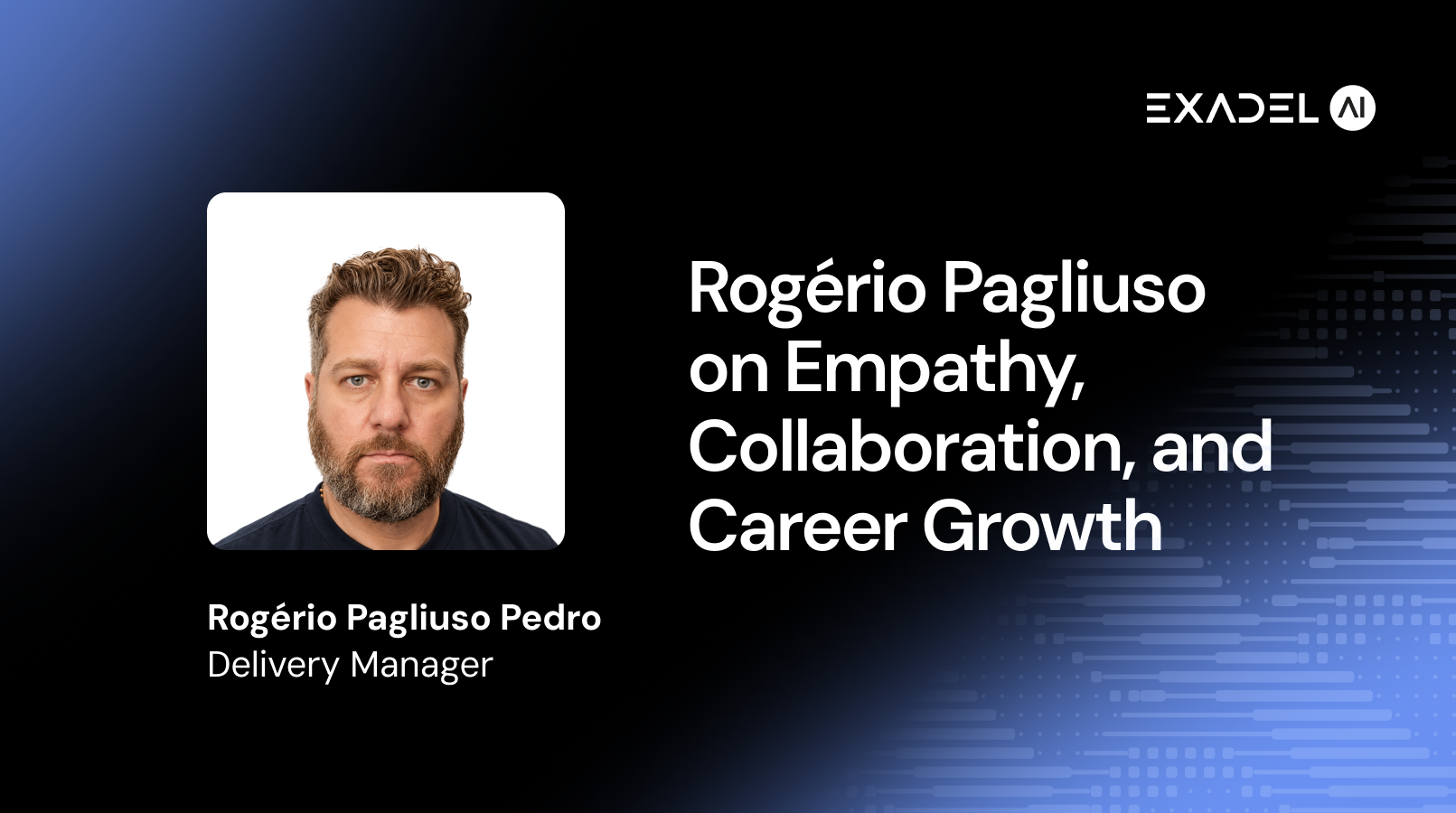
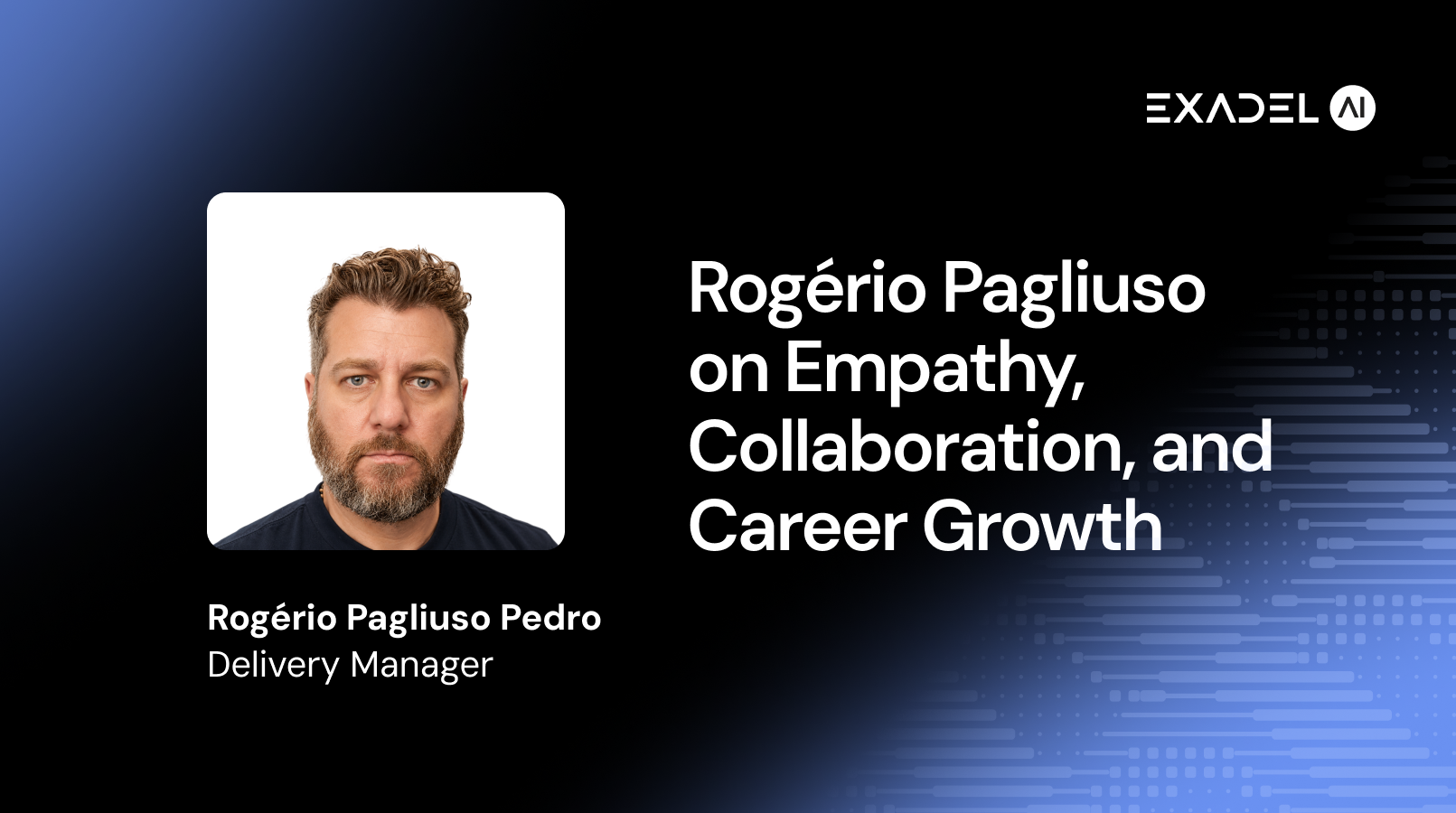
We sat down with Rogerio Pagliuso, Delivery Manager at Exadel Brazil, to talk about leadership, lifelong learning, and the human side of working in global teams.
In this conversation, Rogerio reflects on the moments that shaped his career and shares his advice for LATAM engineers looking to succeed on global teams.
Take a look behind the scenes of his journey.
And if you're considering joining Exadel Brazil, check out our open positions and apply today.
What first pulled you into tech?
From a young age, I loved using technology to solve everyday problems and make life easier. What keeps me in the field is that tech never stands still — it constantly challenges me, pushes me out of my comfort zone, and forces me to keep learning and adapting.
What has been one of your most challenging professional moments?
Probably when I took a project at a large financial institution — a highly critical environment where failure is not an option. To overcome this challenge, I built structures, implemented processes, and focused heavily on anticipating risks
It taught me how to create structure in challenging environments and help teams stay focused on what matters most.
What does a typical workweek look like for you at Exadel?
My week is a mix of strategy, operations, and collaboration across engineering and product teams. I focus on improving the customer journey, removing obstacles, and helping teams work more effectively.
What do you enjoy the most in your work at Exadel?
Which project challenged you the most?
One project involved multiple departments looking at the same problem from completely different perspectives. I used journey mapping to bring everyone together to look at the same workflow, identifying critical points and real pain points collectively.
The most rewarding part was seeing people change their mindset: once they understood the full journey, they stopped acting just as task executors and stepped up as protagonists, anticipating risks and collaborating genuinely.
What’s something you’ve changed your mind about as an engineer?
I believed success at work meant solving problems as quickly as possible, acting like a firefighter. Then I started looking beyond the isolated task and began asking what the person actually wants to achieve and what progress they are trying to make in their daily routine.
I stopped focusing on what they ask for and started focusing on why they ask for it, delivering real progress for that person or department.
How would you describe the day-to-day dynamic within your team?
I work directly with multidisciplinary teams, which creates a rich dynamic full of different perspectives. I see healthy disagreement as a positive sign — it means people care about the outcome. When views differ, I steer the conversation back to what truly matters for the client and the business, removing ego from the discussion.
I practice active listening to ensure everyone feels heard, and I use AI to analyze complex scenarios, which greatly helps support our decision-making.
How do you balance delivery with ongoing professional development?
For me, learning is part of the job, not something separate from it. I learn every day, whether it's reading, collaborating with colleagues, or pursuing formal education.
Currently, I am completing a specialization in project management with a focus on AI, and I naturally apply this to my projects to optimize tasks, automate processes, and bring more precision to our decisions.
What makes the engineering culture here different from other places you’ve worked?
What stands out most at Exadel is that professional growth is actively encouraged, not just talked about. We have a safe space to learn, test, make mistakes, and evolve. Teams share knowledge and build solutions together very naturally.
In many places, the relentless pressure for results ends up swallowing professional development, but here, self-development is exactly what sustains those strong results.
What advice would you give to engineers in LATAM who want to work on global teams?
Develop your technical skills, of course, but don’t overlook empathy and sensitivity. Working in international environments requires a huge capacity to understand others, since everyone comes from different cultures and paces.
Focus heavily on communication, which doesn't just mean speaking the language, but knowing how to structure your thoughts, communicate clearly, and listen well.