
Tags
Share
A ten-year-old girl walks into a robotics class for the first time, hesitant to raise her hand.
Ten years from now, will she be leading an engineering team, or still doubting whether she belongs?
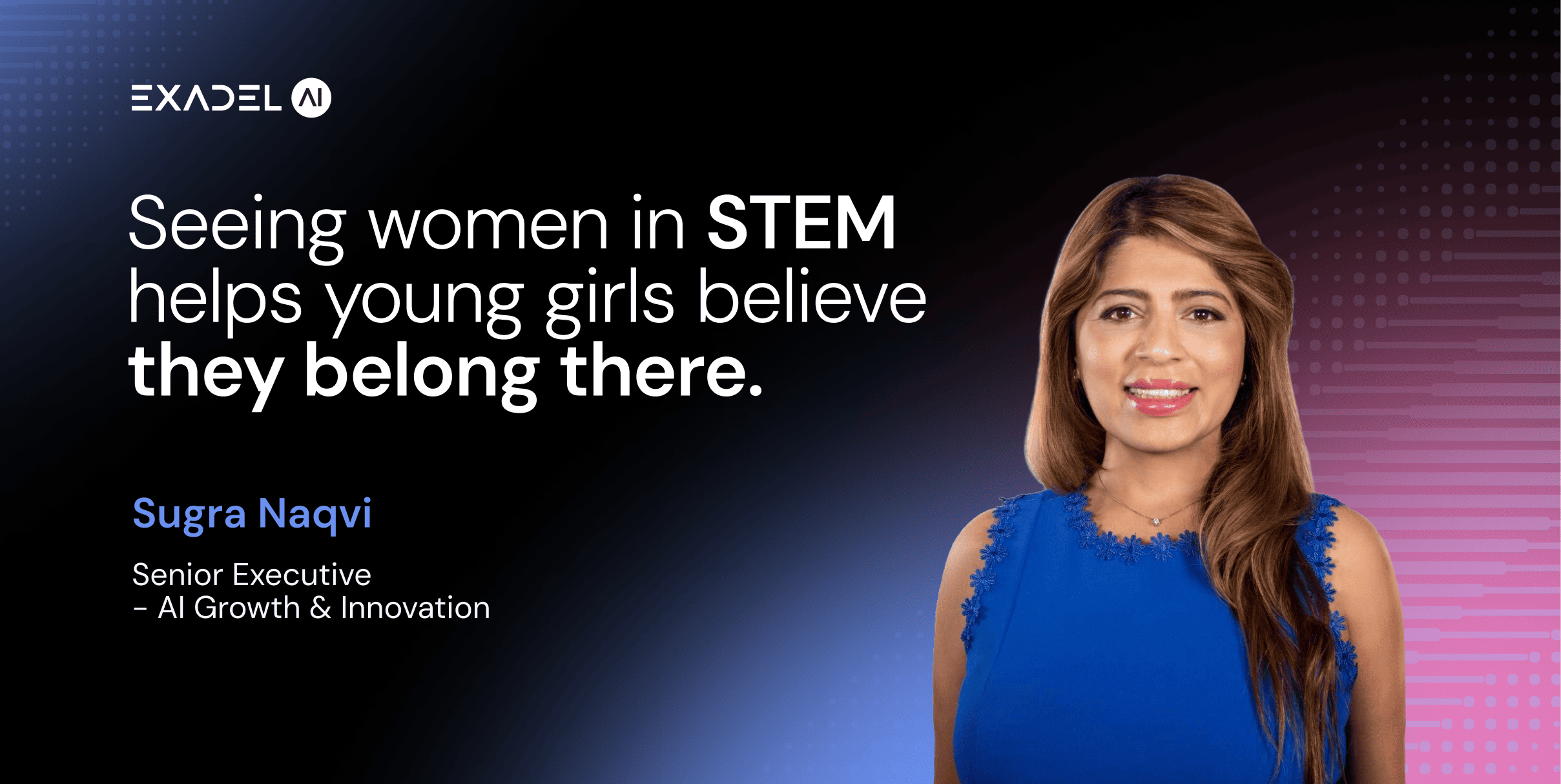
For Sugra Naqvi, Senior Account Manager at Exadel, the answer has very little to do with talent.
It has everything to do with confidence, encouragement, and having someone who shows you what's possible.
For more than seven years, Sugra has volunteered with the IT Girls Foundation, where she serves as a board member, mentor, and instructor. Outside of her full-time role at Exadel, she spends evenings and weekends introducing 4th and 5th grade girls to robotics, engineering, cybersecurity, and technology—helping them discover that STEM isn't just something they can learn, but something they can belong in.
We spoke with Sugra about what first inspired her to get involved, why she continues to dedicate her time to mentoring, and what working with hundreds of young girls has taught her—not only as an engineer, but as a person.
Tell us about the IT Girls Foundation. What is its mission, and how did you first get involved?
IT Girls was created to give young female students interested in STEM a structured extracurricular program where they can explore and develop their interests and talents.
I became involved over 7 years ago with volunteering in the classroom. Being around these young girls and seeing the excitement to learn and become future engineers made me want to mentor and support their passion.
I wanted to show them that girls can set their minds to anything, and work toward achieving it.
What has kept you committed all these years?
It’s been the girls. They have kept me coming back every year. They are so intelligent and with so much potential!
I believe if they can see their future self in me and other strong accomplished female leaders, that they will follow their heart to become an Software Engineer, Software Developers, AI Engineers, Chemist, Aerospace Engineer, Financial Analyst, Robotics Specialist and so much more.
Why is it so important to introduce STEM at such an early age?
When young girls participate in robotics, cybersecurity, engineering, and technology activities, they're not just learning technical skills, they're learning how to solve problems, think critically, collaborate with others, and believe in their own abilities.
Research and experience have shown that many children begin forming opinions about what careers are "for them" at a very young age.
By exposing girls to STEM early, we help them see themselves as future engineers, scientists, technologists, and innovators before stereotypes have a chance to limit their potential.
At IT Girls Foundation, we believe hands-on experiences are powerful.
That confidence reaches far beyond STEM. It helps girls become stronger problem-solvers, more resilient learners, and future leaders.
You mentioned the impact of stereotypes. Why do you think many girls begin doubting themselves as they grow older?
As girls mature and see less people like themselves, or may not have someone to look up to, causing an intense self-doubt. Seeing teachers, mentors, and other parents who are in STEM fields, helps provide confidence and vision to go after their dreams.
What's important to understand is that the issue is rarely about capability. Girls have the same potential to excel in STEM, lead teams, solve complex problems, and innovate. The difference is often access, encouragement, representation, and opportunities to build confidence early.
Do you think we sometimes raise girls and boys differently when it comes to technology and leadership?
Yes, as parents sometimes unintentionally we tend to raise our children differently.
For example, boys are often encouraged to take things apart, experiment, or persist through technical challenges, while girls may receive more praise for being organized, collaborative, or following instructions. Neither is inherently better, but over time these small messages can influence confidence in areas such as technology, engineering, leadership, and problem-solving.
That's why programs like IT Girls Foundation are so impactful.
When girls are introduced to robotics, cybersecurity, engineering, and technology at a young age, they begin to see themselves as creators, builders, innovators, and leaders;
They learn that it's okay to fail, iterate, take risks, and solve difficult problems – skills that matter far beyond STEM.
Is there a moment with one of your students that has stayed with you over the years?
There have been so many memorable moments, but one that has stayed with me was a girl who spoke so proudly about her father, a civil engineer.
She knew how to build the KiwiCo Snake Robot because they had talked about similar engineering concepts at home.
She couldn't wait to take everything she built in class home to share with her family.
Parents plant the seeds of curiosity.
Watching that curiosity grow—and knowing it could shape these girls' futures—is why they've left such a lasting impression on me.
After seven years of volunteering, what has this experience taught you not as an engineer, but as a person?
Being inspired by these young girls, it has taught me that it has little to do with technology but everything to do with people.
The first day of class these girls will walk in feeling a little hesitant to raise their hands or speak up. Over time I have seen them help others, solve complex problems. This has taught me the power of encouragement.
People don't always remember the lesson you taught them on a project they completed. They remember how you made them feel.
If a girl leaves our program feeling more confident, more capable, and more willing to pursue her dreams, then we've accomplished something meaningful.
Has working with children changed the way you think about technology or your own career?
Absolutely.
Working with children has reminded me that technology starts with curiosity.
Kids ask questions, challenge assumptions, and approach problems with creativity adults sometimes lose over time.
It has also changed how I define success. While I still value technical achievements, I find just as much fulfillment in helping others learn, grow, and gain confidence.
Watching a student go from saying, "I can't do this" to "What's next?" is incredibly rewarding.
Most importantly, it has reinforced my belief that the greatest investment we can make isn't in technology, it's in people.
By inspiring girls to explore STEM, we're helping shape the innovators, engineers, and leaders of tomorrow.
How do your work at Exadel and your passion for mentoring complement each other?
For me, mentoring isn't separate from my career, it's an extension of it.
Exadel has a culture of continuous learning, innovation, and collaboration, and it has strengthened my passion for mentoring and giving back to the community.
The company encourages growth, leadership, and sharing knowledge, which naturally aligns with my work through the IT Girls Foundation – both experiences are centered around empowering others to reach their potential.
Most importantly, working at Exadel has reinforced my belief that great technology is built by diverse teams with different perspectives.
By encouraging more girls to explore STEM today, we're helping build a future workforce that is more innovative, inclusive, and representative of the world we live in.
Imagine one of your students reads this interview ten years from now. What's the one message you'd want her to remember?
If there's one thing I'd want every girl to remember, it's this:
The girls thought I was there to teach and mentor, but I've learned just as much from them.
They've taught me to remain curious, ask questions, and approach challenges with an open mind.
They don't see obstacles the way adults do. They dream big, and they aren't afraid to imagine what's possible.
***
Sugra's story is a reminder that encouraging the next generation of innovators doesn't always begin in a university classroom or a technology conference. Sometimes, it starts with a child building her very first robot—and with someone who believes in her before she believes in herself.
At Exadel, we're proud to celebrate colleagues who use their expertise not only to build better technology, but also to create opportunities for others to discover what's possible. For Sugra, every classroom is another chance to inspire the engineers, innovators, and leaders of tomorrow.