

Tags
Share
“Risk is our business.”
James T. Kirk, Star Trek. Return to Tomorrow
Captain Kirk’s line, in response to McCoy’s caution about engaging with advanced intelligence, was not an argument for recklessness. It was an argument for disciplined exploration: understanding the dangers, assessing risks with rigor, weighing the potential, and then making the decision to boldly go.
Financial services have always worked this way. Banks, insurers, asset managers, and fintech companies do not avoid risk altogether. They price it, model it, govern it, monitor it, and explain it. Then…they boldly go….
AI now belongs in that same category.
The question is not whether financial services organizations should use AI. Many already are. The harder question is whether their AI programs are ready to operate inside one of the most scrutinized, regulated, and risk-sensitive sectors in the world.
That is why an AI readiness assessment for financial services cannot be generic. A bank, insurer, payments provider, or wealth management firm needs to know that its AI tools are integrated into robust data foundations that can withstand production, audit, regulatory scrutiny, customer impact, and board-level scrutiny.
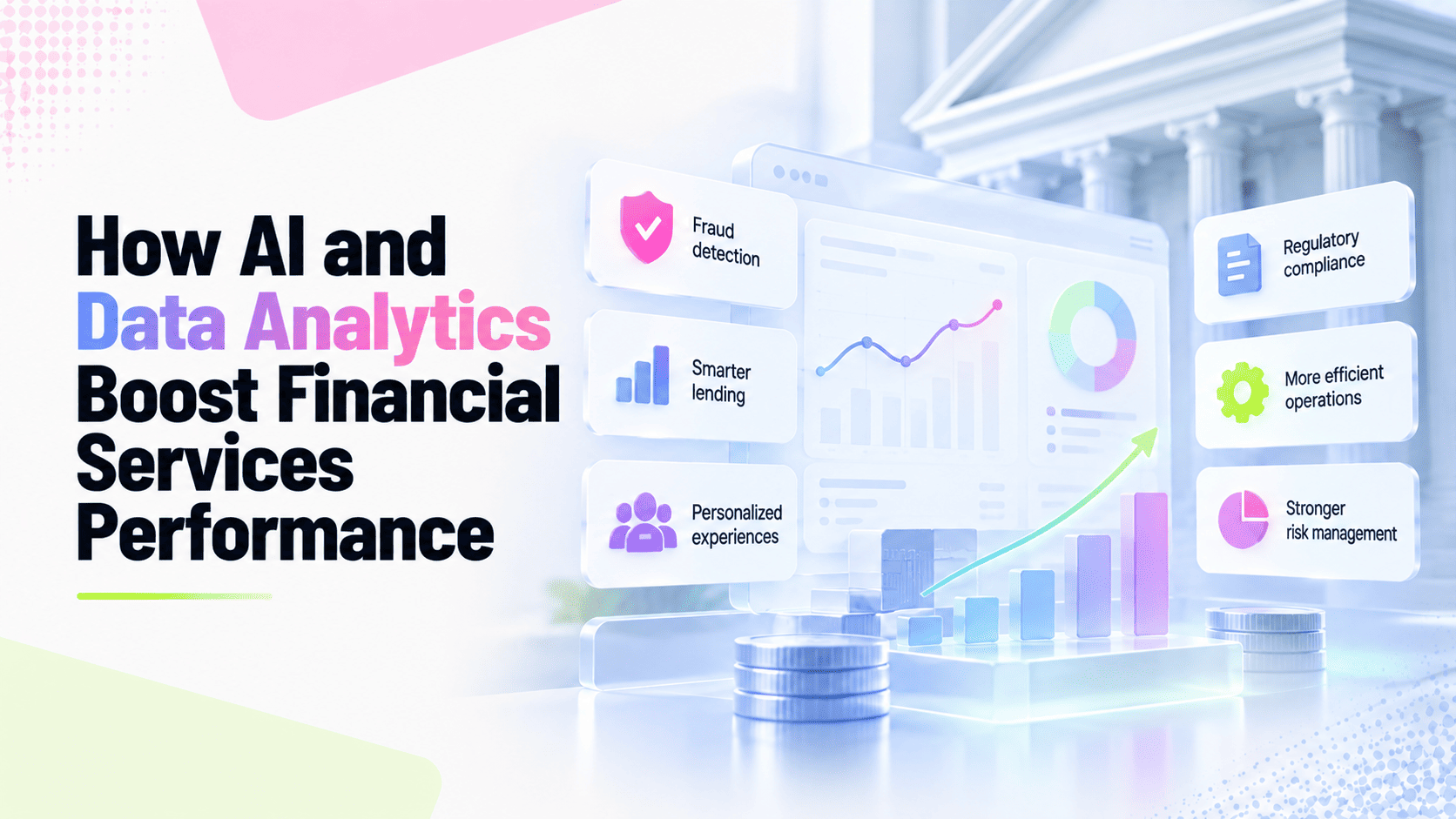
AI in financial services can create enormous value: faster fraud detection, sharper credit decisions, more efficient claims processing, better customer personalization, improved compliance workflows, and stronger operational resilience.
But the sector’s constraints are different. Data is sensitive. Decisions affect people’s access to financial services. Models must be explainable. Outputs must be auditable. Vendors must be assessed. Regulators must be satisfied. And AI cannot become another layer of complexity inside already complex legacy systems.
That is why AI readiness in financial services is not about slowing innovation down. It is about making AI strong enough, risk-free enough, and governed enough to scale.
Why Financial Services Faces Unique AI Readiness Challenges
Every industry has AI readiness challenges. Financial services have more consequences when those challenges are missed.
A retail company may use AI to recommend products. A bank may use AI to influence credit, fraud, pricing, risk, compliance, or customer eligibility decisions. An insurer may use AI to support underwriting, claims handling, risk assessment, and pricing. An asset manager may use AI to improve research, reporting, portfolio analysis, and operational workflows.
In each case, the business value is real. But so is the exposure. Financial services firms need to ask more than “Can this model work?” They need to ask:
Can we…
- Explain it?
- Validate it?
- Monitor it?
- Govern it?
- Prove which data shaped the output?
- Show who owns the decision?
- Defend it to regulators, auditors, customers, and internal risk teams?
That is where many AI programs begin to stall. Not because the use case lacks value, but because the organization is not ready to move from a controlled pilot to a governed production system.
This is especially true when AI touches regulated decisions, customer outcomes, or material business processes. A proof of concept may work in isolation. Production AI has to work inside the real operating environment: legacy platforms, fragmented data, model risk controls, compliance review, legal oversight, cybersecurity, business ownership, and human decision pathways.
For financial services, AI readiness is therefore a question of alignment. Strategy, data, technology, governance, talent, and ROI all need to support the same outcome: AI that can create value without creating unmanaged risk.
The 5 Primary AI Readiness Blockers in Financial Services
Financial services organizations rarely lag with AI because they lack ambition. They fall behind because one or more readiness blockers prevent AI from scaling safely.
Here are five of the most common.
1. Model Risk Management Requirements
Financial services already understand model risk. The challenge is that AI, especially machine learning and generative AI, can stretch traditional model governance processes.
A model used in a material business decision must be developed, validated, monitored, and governed. The Federal Reserve’s SR 11-7 guidance emphasizes robust model development, effective validation, and sound governance, policies, and controls. Those principles are highly relevant to AI.
The difficulty is that AI models may be less transparent, more data-dependent, more dynamic, and harder to explain than traditional statistical models. That creates practical questions:
- Who validates the model?
- How often should it be reviewed?
- How is drift detected?
- What happens when outputs change?
- How are exceptions handled?
- What evidence is needed before the model enters production?
If these questions are not answered early, AI pilots may move quickly at first and then stall when risk, compliance, and model validation teams become involved.
A financial services AI readiness assessment should identify whether current model risk processes can support AI, or whether they need to evolve.
2. EU AI Act and Regulatory Readiness
Financial services firms operating in or serving the European market also need to consider the EU AI Act. The Act identifies certain AI systems as high risk, including systems used to evaluate creditworthiness or establish credit scores, and systems used for risk assessment and pricing in life and health insurance.
That matters because high-risk AI systems require stronger controls around risk management, data governance, technical documentation, transparency, human oversight, accuracy, robustness, and cybersecurity.
This does not mean financial services firms should avoid AI. It means AI initiatives need to be assessed through a regulatory lens from the beginning.
A credit scoring model, fraud detection system, insurance pricing tool, customer risk classifier, or compliance assistant may look like a technology project. But in practice, it may also be a regulatory, legal, operational, and reputational issue.
AI readiness means knowing which category each use case belongs to before the organization invests heavily in building or scaling it.
3. Data Governance Across Siloed Legacy Systems
Financial services firms often have large volumes of valuable data. The problem is that the data is not always ready for AI.
Customer data may sit across core banking systems, CRM platforms, payment systems, policy administration platforms, trading systems, risk systems, data warehouses, and third-party tools. Definitions may differ between business units. Ownership may be unclear. Access may be slow. Quality issues may be known but not systematically resolved.
A pilot can often work around these problems. A production AI system cannot.
AI depends on data that is accessible, trusted, governed, and usable for the specific decision or workflow it supports. In financial services, this also means understanding permissions, lineage, retention, privacy, consent, and regulatory constraints.
A readiness assessment should therefore examine the types of data and whether they can be used safely, consistently, and lawfully, and if not, what needs to be done to ensure this.
This is often where AI ambition meets the reality of legacy transformation.
4. Explainability and Auditability Requirements
Financial services firms cannot rely on “the model said so.”
A model used in credit, risk, fraud, claims, pricing, or compliance must be explainable enough for the context in which it operates. That does not always mean every AI system needs to be perfectly transparent in the same way. But the organization must understand what level of explanation is required, who needs it, and how it will be produced.
For some AI use cases, explainability may support customer communication. For others, it may support internal audit, model validation, regulatory review, or risk oversight. In every case, the organization needs a defensible record of how the model was built, what data it used, how it was tested, how it performs, and how it is monitored.
This is where Spock’s warning in The Ultimate Computer still feels current: “Computers make excellent and efficient servants; but I have no wish to serve under them.”
That is the heart of AI governance in financial services. AI can support faster decisions, sharper fraud detection, better risk signals, and more efficient operations. But it cannot become a black box the organization follows without explanation, ownership, or control.
A credit decision, fraud alert, insurance pricing recommendation, or customer risk score cannot simply be “what the model said.” Financial services firms need to know what data was used, how the model was validated, where human oversight applies, how exceptions are handled, and who is accountable when the output is wrong.
5. Third-Party AI Vendor Risk
Many financial services firms will not build every AI capability themselves. They will use vendors, platforms, embedded AI tools, copilots, analytics solutions, and third-party models.
That creates another readiness challenge.
A vendor may provide the interface, the model, the infrastructure, or part of the decision logic. But the financial services firm still needs to understand the risk. It needs clarity on data handling, security, audit rights, explainability, model updates, service levels, incident response, resilience, and regulatory obligations.
This becomes especially important when third-party AI touches customer data, regulated workflows, material decisions, or operationally critical processes.
AI readiness, therefore, includes vendor governance. The question is whether a vendor’s AI tool works and how well the organization can safely integrate, monitor, and govern that tool inside its own risk environment.
AI Maturity Benchmarks in Financial Services: Where the Sector Typically Stands
Financial services are often more mature than other sectors in governance, risk management, and compliance discipline. But that does not automatically translate into AI readiness.
In many firms, AI maturity varies sharply across the six dimensions Exadel assesses: strategy, data, technology, talent, governance, and ROI.
Strategy & Integration
Financial services organizations often have a strong executive interest in AI. The strategic potential is clear: reduce cost, improve decision-making, accelerate operations, strengthen customer experience, and detect risk faster.
The challenge is prioritization. Many firms have too many AI ideas and not enough clarity on which ones are ready to scale, which ones are too risky, and which ones are not connected to measurable business value.
A mature AI strategy should identify the use cases that matter most, the value they are expected to create, and the conditions required to move them into production.
Data Foundation
This is often one of the hardest dimensions.
Financial services firms usually have enormous data assets, but AI needs more than volume. It needs quality, access, lineage, consistency, governance, and integration.
Legacy systems, mergers, product silos, regional differences, and regulatory constraints can all make AI data readiness harder than it first appears.
A firm may be data-rich but AI-constrained.
Tech Stack & MLOps
Many firms have strong enterprise technology functions, but production AI requires specific operating capability: model deployment, monitoring, version control, testing, observability, incident response, and lifecycle management.
A pilot may sit comfortably inside a data science environment. A production AI system has to connect to applications, workflows, APIs, security controls, and operational support.
This is where financial services firms often discover the gap between building AI and operating AI.
Talent & Organization
Financial services firms may have strong compliance, risk, data, and technology teams. But AI needs these teams to work together in new ways.
The issue is often not a lack of talent. It is a lack of shared ownership.
- Who owns the model after deployment?
- Who monitors performance?
- Who manages business impact?
- Who handles exceptions?
- Who approves changes?
- Who decides when a model should be paused?
A readiness assessment should clarify that the right skills exist, and the operating model connects those skills effectively.
Governance & Ethics
Financial services firms are usually more advanced in governance than many other industries. But AI governance introduces new questions around model transparency, bias, fairness, human oversight, data provenance, and third-party model risk.
The governance challenge is to make AI scalable whilst maintaining full, confident control.
If every AI use case gets trapped in slow, unclear review cycles, innovation stalls. If the review is too light, risk increases. The mature position is an AI governance framework that gives teams clear boundaries, consistent decision criteria, and a route to production.
Investment & ROI
Financial services organizations are under pressure to prove that AI investment creates measurable value. That can be difficult when AI benefits are distributed across productivity, risk reduction, customer experience, decision speed, operational resilience, and compliance efficiency.
A mature AI program needs a clear value baseline before the build begins. Ensure you’re answering questions like: What…
- process is being improved?
- cost is being reduced?
- risk is being lowered?
- revenue opportunity is being created?
- decision is becoming faster, better, or more consistent?
Without those baseline answers, ROI becomes hard to defend.
What ‘Good’ Looks Like: Characteristics of a Financially Mature AI Program
A financially mature AI program is not defined by the number of pilots in progress. It is defined by the organization’s ability to move the right AI use cases into production safely, measurably, and repeatedly.
‘Good’ looks like this:
- Use cases are selected based on business value, risk profile, data readiness, and production feasibility.
- Data foundations are strong enough to support live workflows, not just controlled experiments.
- Model risk management is built into the lifecycle, not added just before deployment.
- Governance is clear, practical, and proportionate to the risk of the use case.
- Human oversight is designed intentionally, with clear escalation paths and decision rights.
- AI systems are monitored after deployment for performance, drift, fairness, security, and business impact.
- Third-party AI tools are assessed with the same seriousness as other material technology and operational dependencies.
- ROI is measured against a baseline, not inferred from activity.
- Most importantly, mature financial services firms treat AI as an operating capability, not a collection of isolated experiments.
Organizations that can do this understand that AI value depends on the system around the model: data, architecture, risk, people, process, governance, and measurement.
This is why AI readiness matters before scale.


AI Readiness Assessment
Not sure whether your AI program is ready for financial services scrutiny?
Exadel’s AI readiness assessment for financial services maps your maturity across strategy, data, technology, talent, governance, and ROI.
How to Build an AI Readiness Roadmap for Financial Services
An AI readiness roadmap should not begin with a list of tools. It should begin with a diagnosis.
The first step is to map current AI activity. Which use cases are live, in pilot, under consideration, or hidden inside business teams? Which use cases affect customers, regulated decisions, financial outcomes, or operational resilience?
The second step is to assess each use case against the six readiness dimensions: strategy, data, technology, talent, governance, and ROI.
The third step is to identify blockers. Is the problem data quality? Model validation? Explainability? Legacy integration? Ownership? Compliance uncertainty? Lack of MLOps? Weak ROI measurement?
The fourth step is to prioritize. Some use cases may be ready to scale. Others may need stronger foundations. Some may need to be redesigned. A few may need to stop.
The fifth step is to define a practical roadmap. That roadmap should show what to fix, what to fund, what to govern, what to scale, and what to pause.
This is where financial services AI readiness becomes commercially useful. It helps leaders make better investment decisions before committing more budget, more political capital, or more operational dependency to AI programs that may not yet be ready.
A good roadmap should answer which:
- AI use cases should move forward first?
- use cases carry the highest regulatory or operational risk?
- data foundations need to be improved?
- governance controls must be in place before deployment?
- systems need integration or modernization?
- stakeholders need ownership?
- outcomes should be measured?
- investments should wait?
That is the difference between an AI strategy and an AI operating plan.
The Case for an Expert-Led Assessment in a Regulated Environment
Financial services firms can run internal self-assessments. In fact, they should. Internal teams understand the organization’s systems, constraints, priorities, and politics.
But self-assessment has limits.
Teams close to the work may overestimate readiness where activity is visible. A business unit running several pilots may feel mature. A data team may feel ready because a platform exists. A risk team may see issues that the innovation team underestimates. Leadership may see AI momentum and assume the foundations are in place.
Everyone is seeing part of the system.
A structured, expert-led AI readiness assessment gives leaders a more objective view. It benchmarks maturity across the six dimensions, identifies the blockers that matter most, and turns scattered observations into a prioritized roadmap.
In financial services, that objectivity is especially valuable because AI decisions often sit at the intersection of technology, regulation, operations, customer trust, and business value.
An external assessment can help answer the questions internal teams may struggle to resolve alone:
- Are our AI use cases genuinely ready for production?
- Are we overestimating our data foundation?
- Do our model risk processes fit AI?
- Are our governance controls proportionate and practical?
- Can we explain and audit the decisions that matter?
- Are we measuring ROI clearly enough to justify the next investment?
The point is not to produce another report saying AI is important. Financial services leaders already know that.
The point is to show what is ready, what is exposed, and what needs to change before AI moves further into the business.
Move Forward With Discipline
Financial services does not need to choose between AI ambition and control.
The sector’s advantage is that it already understands high-stakes systems, regulated decisions, and accountable risk-taking. It knows that risk is not something to ignore. It is something to understand, price, govern, monitor, and explain.
AI should be brought into that same discipline.
Captain Kirk’s point still holds: risk is part of the mission. And Spock’s warning matters just as much: computers should remain excellent servants, not unaccountable masters. We need to keep our AI under our full control.
That is the balance financial services firms now need to strike.
AI can help banks, insurers, asset managers, and fintech companies move faster, serve customers better, detect risk earlier, and operate more efficiently. But only if the foundations are ready.
Before the next AI investment decision, financial services leaders need a map of where their organization stands across strategy, data, technology, talent, governance, and ROI.
Exadel’s AI readiness assessment for financial services gives you a clear view.
It identifies where your AI program is ready to scale, where it is exposed, and what needs to happen next — before your next audit, board review, or production deployment.