Table of Contents
Tags
Share
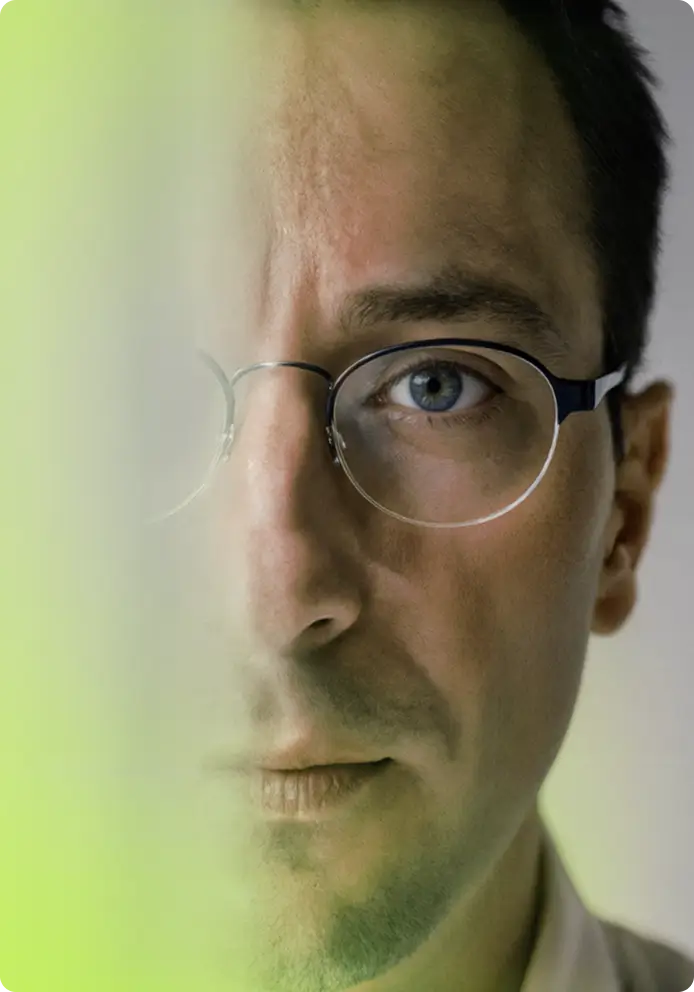
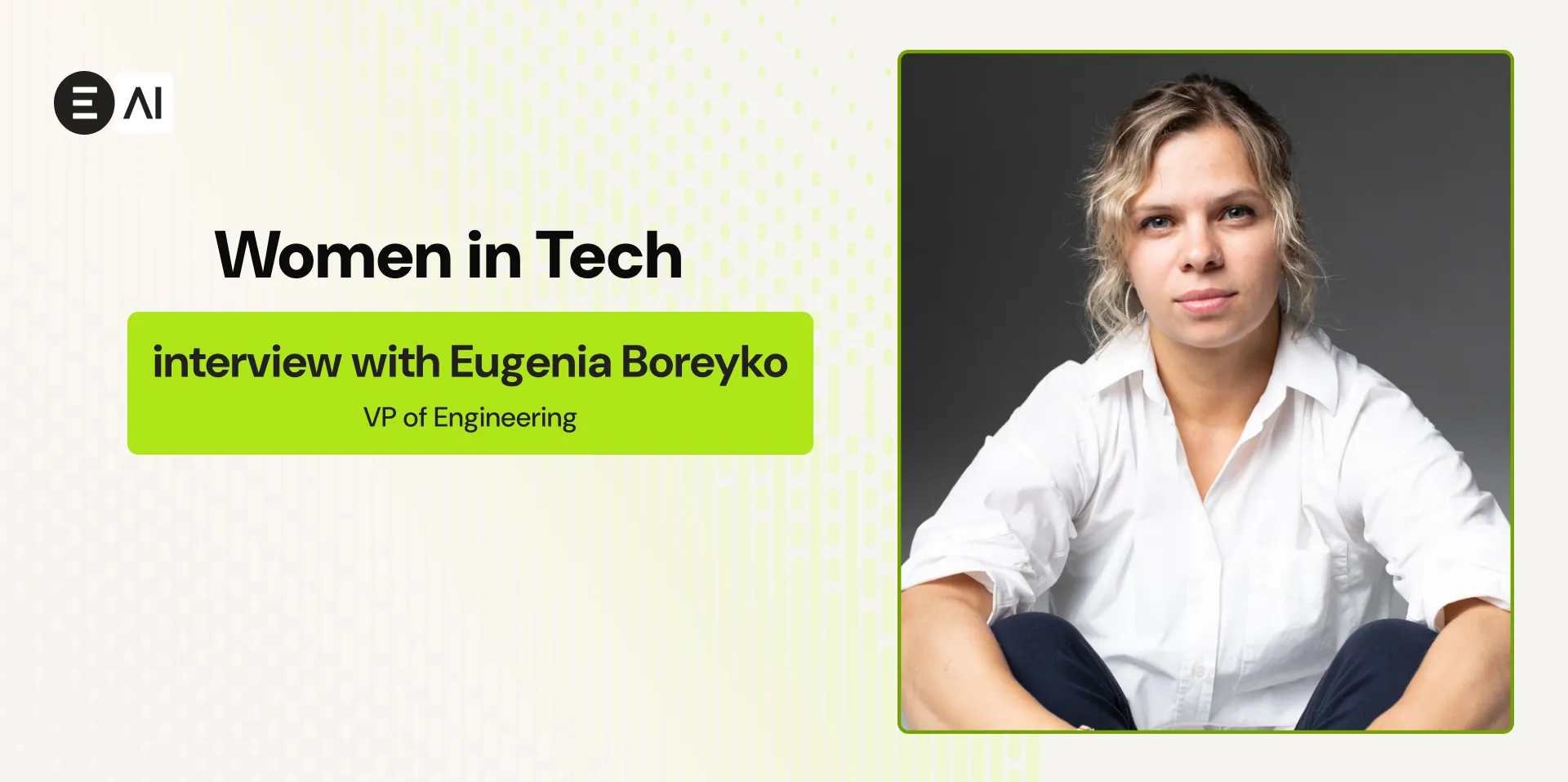
If you’re looking for some inspiration, this is the interview for you. Eugenia Boreyko, Exadel VP of Engineering believes that you can achieve anything, it just takes time and consistency. Her story reminds us that resilience isn’t about never falling — it’s about choosing to stand up smarter every time.
In this talk, we asked her on opinions on topics like IT leadership, self-development, AI; and on advices she would give to women in technology. Read on to find out.
What was your childhood dream job? Does it connect in any way to what you do now?
Since first grade, I dreamed of becoming a doctor — specifically a surgeon. Nothing else existed for me. I graduated from medical school, completed my internship, and soon realized it wouldn’t be a sustainable career financially. During my maternity leave, I retrained as a QA engineer — and that’s how I stepped into IT. And it’s been 14 years i’m in this field.
Do you remember the first time you realized you were good at solving problems?
It happened back when I worked at a hospital. My supervisor tried to force me to take an extra shift I wasn’t obligated to do. I came prepared — I knew my rights and calmly stood my ground. When she realized she couldn’t pressure me, she simply started clicking her mouse on a turned-off computer and dismissed me.
That was the moment I tasted victory — the “smell of blood.” I learned a simple rule: study the question, prepare well, and rely on facts. That feeling never left me.
If your younger self could see you now, what would surprise her most?
Probably my level of confidence and how much I’m capable of giving without expecting anything in return. I grew up as a quiet, self-doubting kid. Books changed that — they became an endless source of wisdom. They opened new perspectives and showed me that life could be lived differently.
Every story has a turning point — what moment changed how you see yourself professionally?
I don’t remember a single moment when I thought, “Now I’m a professional.” But I do remember when I realized what I didn’t want anymore.
I had just been promoted and went to a meeting with the VP to discuss salaries for my department. I was nervous, unprepared, and it showed. The VP stopped me mid-meeting and told me to come back when I was ready. That hit hard. I sat in silence for a long time afterward, replaying everything in my head.
And then it clicked: stop waiting for someone to teach you — learn it yourself. I deep-dived into the topic, built a full compensation process for my department, and later it was scaled across the whole Engineering org. That moment changed everything. The anxiety was gone — because I had built real confidence through competence.
Who has influenced your growth the most — a mentor, a colleague, a team?
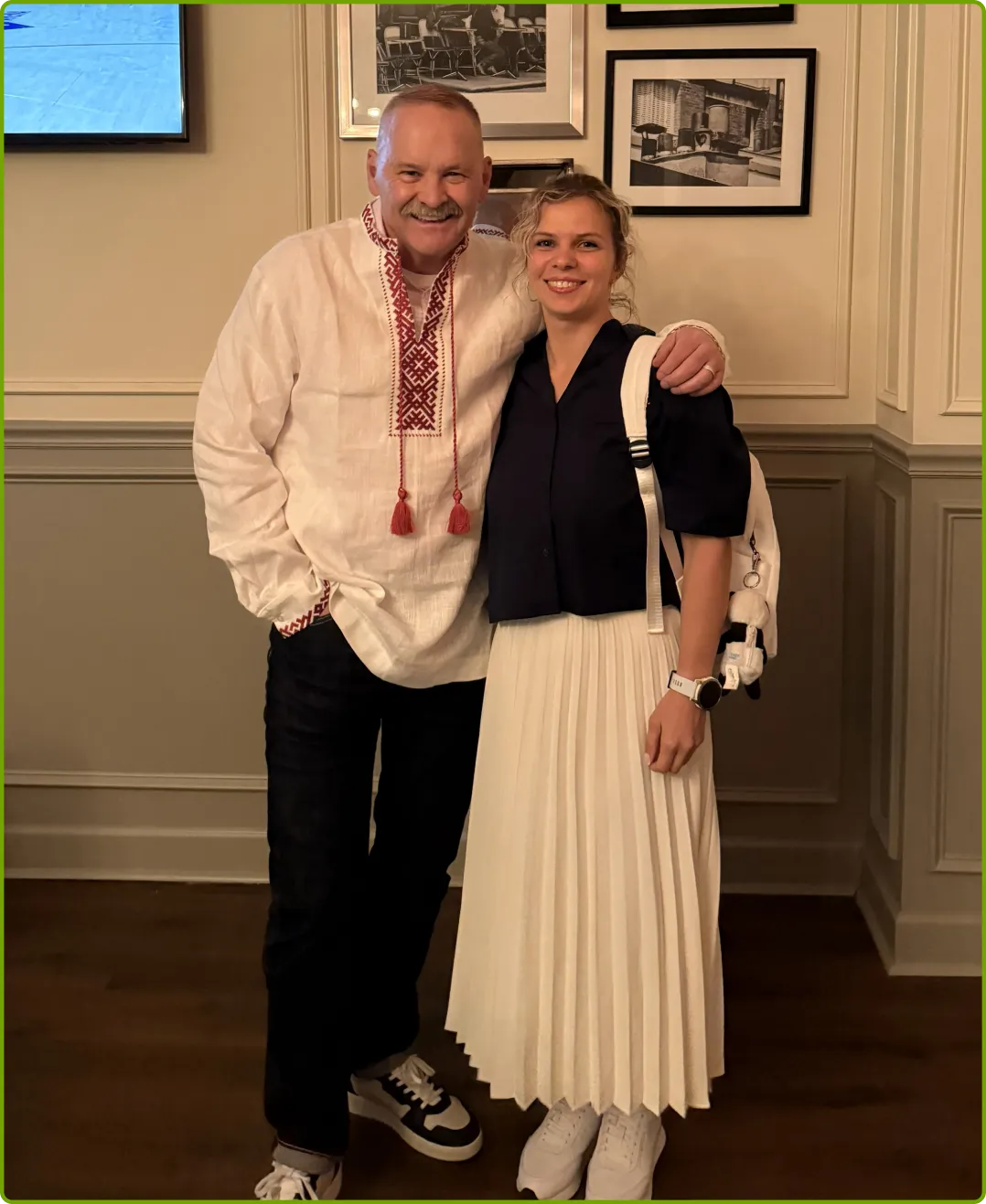
It was that very same VP. He became a role model of what true leadership looks like — professional, grounded, and deeply respectful. He taught me that respect starts with self-respect, and that it must stand on something solid — knowledge, skill, and the ability to turn both into tangible results.
What was the first project at Exadel that really stretched your skills — technically or personally?
Honestly, Exadel has challenged me from day one. The company is just the right size — not so small that everything is chaos, and not so big that everything’s already built. The real stretch, though, came from my team. When I first saw the lineup, all strong engineers, mostly men, fully assigned to projects, I thought, “Oh well, here we go.”
Building trust and a team out of people I hadn’t hired, who didn’t know me, and weren’t used to working together, that was tough. Especially with two guys, our Java and .NET leads — quiet, reserved, not exactly open to small talk. But we started with one thing: my word.
Which window did Exadel open for you that you might not have found elsewhere?
As I said, Exadel is that perfect in-between, where things are already moving, but there’s still room to build. That means endless opportunities to shape processes and ideas. When I joined, Alexei (who hired me) said, “You’ll have the freedom to build.” And he was right. Here, opportunities are everywhere. The challenge isn’t “what to do,” but “how to fit everything in.” Every planning cycle feels like choosing between too many great options, and that’s the best kind of problem. And yes, we’re in a time of global crisis — but I see it as a time of possibilities.
What excites or scares you about working with AI?
We’ve seen many “revolutionary” technologies turn into everyday tools and AI is just the next step of evolution. I fully support it and do my best to keep up. It makes us more productive — though not necessarily smarter.
What’s one thing people would never guess about working in your role?
That most of my job isn’t about technology, it’s about building alignment, managing emotions, and turning chaos into structure. My husband often says, “I get why companies need people like you and me — someone has to make sure things actually get done.” And that’s probably the best description of what we do. We use whatever tools are needed — sometimes it’s a technical fix, sometimes a management call, sometimes even a bit of psychological support. But one thing never changes: the job must get done.
What do you do outside of work that secretly makes you better at your job?
Training. Physical training teaches discipline and gets you in the habit of doing things even when you don’t want to. It’s about showing up and giving what you can that day, even if it’s not 100%. I spent a year learning ring muscle-ups and eight months learning to walk on my hands — through injuries, failures, and setbacks. But I made it. And that process taught me the core truth: you can achieve anything — it just takes time and consistency. Training shouldn’t be an event; it should be a routine.
Who inspires you most outside of tech, and why?
I don’t believe in idols. But I do believe in learning from people’s behaviors. Back in school, there was a girl who was arrogant, but incredibly organized. I disliked her attitude, but adopted her precision. The same with athletes, I admire their resilience, not their fame. I remind myself often: even great people bleed red. It keeps me grounded — helps me see others as equals, not icons.
What personal quality became your unexpected superpower in tech?
My medical background. It taught me to stay composed under pressure — no noise, no emotion, just focus and action. And another one: relentless follow-up. I call it “methodical persistence.” When you need something done, remind, follow up, push, repeat. Consistency wins.
If you could describe your career journey as a movie title, what would it be?
Never Give Up. Simple, but it defines my story perfectly.
What would you love to see more women working in IT stop doing? And what would you love them to start doing?
Looking back in 10 years, what would make you proudest?
That I didn’t give up where I easily could have. I’ve faced a lot — betrayal, harassment, burnout, disappointment, wrong fits. But I learned that not every failure means something’s wrong with me.Today, I’m stronger, smarter, and calmer than I’ve ever been, and that’s something to be proud of.
If you think about your further route, what do you want to explore more — technically or personally — at Exadel?
Standing still means falling behind, especially in tech. The world moves fast, and you either evolve or become irrelevant. What I love about my work is that it allows me to grow both technically and personally. I’m fascinated by everything related to leadership, management, and process reengineering — and I plan to keep diving deeper into that space.